
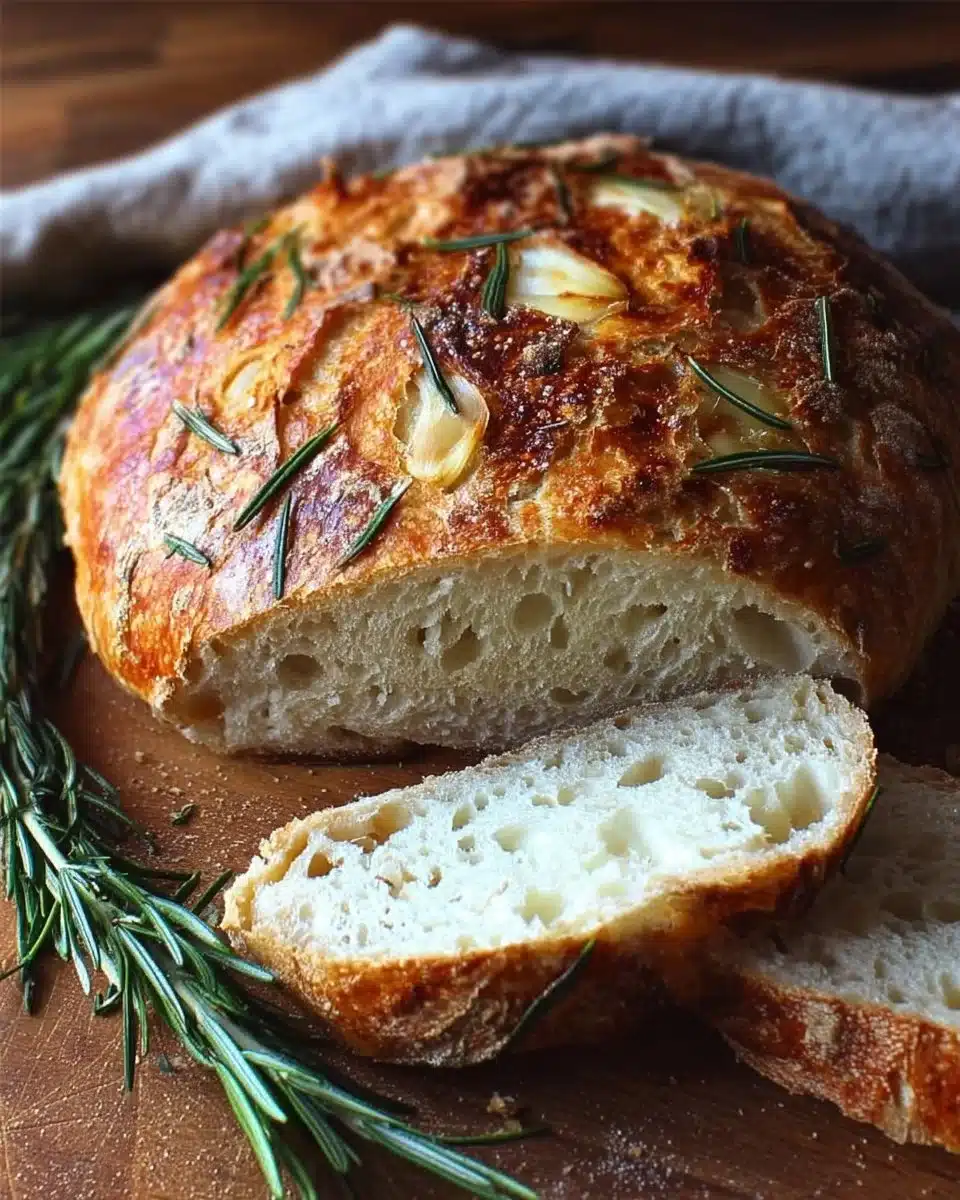
The first time I pulled a loaf of Rosemary & Roasted Garlic Artisan Bread from the oven, the kitchen smelled like a sun-warmed herb garden and my nonna’s Sunday table rolled into one. I remember the crust crackling under my fingertips while steam rose in soft, savory plumes; immediately, I knew this bread would become a ritual. Because I grew up learning how dough responds to touch and patience, every rub of rosemary and roast of garlic felt like repeating a small, beloved prayer. If you love deep, earthy flavors, you might also enjoy a creamy companion—try this comforting roasted garlic bisque recipe to sip alongside the bread: roasted garlic bisque recipe.
Article Body
Flavor and Popularity
The Unique Flavor Profile of Rosemary & Roasted Garlic Artisan Bread
Rosemary & Roasted Garlic Artisan Bread blends bright, piney herb notes with sweet, mellow roasted garlic, and so it strikes a beautiful balance between aromatic and umami. The crust toasts to a golden, crunchy shell, while the crumb stays tender, slightly chewy, and layered with flecks of rosemary and ribbons of roasted garlic. Moreover, when you brush the loaf with a little olive oil before serving, the flavors bloom; therefore the taste becomes both buttery and herbaceous. Bakers favor this loaf because it adapts—use it for bruschetta, for dipping into soups, or simply to sop up extra sauce from a plate of pasta.
Why This Recipe Is a Family Favorite and Crowd-Pleaser
Families return to this recipe because it hits comforting, familiar notes while still feeling special. Children reach for its warm, garlicky slices, while guests admire the rustic crust and fragrant rosemary. In addition, this bread pairs beautifully with salads, roasted vegetables, and meat dishes. Finally, because you can make it ahead and freeze or reheat it, it works wonderfully for casual dinners and festive gatherings alike.
Ingredients and Preparation
Essential Ingredients and Possible Substitutions
- Bread flour (or all-purpose flour if necessary) — bread flour gives better structure, but all-purpose works in a pinch.
- Active dry yeast — instant yeast can replace it, though you may adjust proofing times.
- Warm water (about 105–110°F/40–43°C) — ensure it’s warm, but not hot, to activate the yeast.
- Extra-virgin olive oil — choose a fruity oil for depth; reduced-fat oils will change the mouthfeel.
- Fine sea salt — balances and rounds flavors.
- Fresh rosemary — roughly chopped; dried rosemary can substitute, but use less and crush it first.
- Roasted garlic — made by slow-roasting heads of garlic until soft and caramelized; roasted garlic paste works too.
- Optional: a touch of honey or sugar — helps yeast activity and adds a whisper of sweetness.
- Optional finishing: flaky sea salt and a drizzle of olive oil.
Substitutions and swaps:
- For a gluten-free option, use a tested gluten-free artisan flour blend and add xanthan gum if needed.
- For a richer loaf, swap some water for whole milk or add a tablespoon of unsalted butter to the dough.
- To deepen umami notes, fold in a handful of finely chopped sautéed mushrooms or grated Parmesan.
Step-by-Step Recipe Instructions with Tips
Ingredients (for one large loaf or two small boules)
- 500 g bread flour (about 4 cups)
- 325–350 g warm water (1 1/3 to 1 1/2 cups)
- 2 tsp fine sea salt
- 2 tsp sugar or honey (optional)
- 2 1/4 tsp active dry yeast (one packet)
- 3 tbsp extra-virgin olive oil
- 3–4 tbsp roasted garlic paste (about 2–3 heads roasted)
- 2 tbsp fresh rosemary, finely chopped (plus extra sprigs for garnish)
- Flaky sea salt for finishing
Directions and Tips
- Bloom the yeast: In a small bowl, stir the warm water with sugar and yeast. Let it sit for 5–8 minutes until foamy. If it doesn’t foam, the yeast may be dead; start again with fresh yeast.
- Mix dry ingredients: In a large bowl, whisk the flour with salt and chopped rosemary. Then create a well in the center.
- Combine wet and dry: Pour the yeast mixture and olive oil into the well. Stir with a wooden spoon until a shaggy dough forms. Add roasted garlic paste in two small dollops so it disperses evenly.
- Knead and feel: Turn the dough onto a lightly floured surface and knead for about 8–10 minutes, until the dough becomes smooth and elastic. Alternatively, use a stand mixer with a dough hook on medium speed for 6–7 minutes. Tip: Knead until the dough passes the “windowpane” test—stretch a small piece; it should thin without tearing.
- First rise: Place the dough in an oiled bowl, cover with a damp towel, and let it rise in a warm spot for 1–1.5 hours, until doubled.
- Shape the loaf: Gently deflate the dough and fold it into a tight boule or oblong loaf. For an artisan crust, handle gently to keep the internal air pockets.
- Second rise: Place the shaped loaf on a parchment-lined baking sheet or in a floured banneton. Cover and let rise for 45–60 minutes.
- Preheat the oven: Preheat to 450°F (230°C). Place a heavy baking stone or inverted sheet pan in the oven to warm; add a small metal pan on the lower rack for steaming.
- Score and steam: Score the loaf with a sharp blade to help it expand. Pour a cup of hot water into the small pan to create steam, then quickly close the oven door.
- Bake: Bake for 20–25 minutes, until the crust turns deep golden brown and the loaf sounds hollow when tapped on the bottom. For a crisper crust, bake an additional 3–5 minutes while rotating the loaf.
- Finish and rest: Remove from the oven, brush with a little olive oil, and sprinkle with flaky sea salt and fresh rosemary. Allow the bread to cool for at least 30 minutes before slicing so the crumb sets.
Baker’s Notes and Tips
- Roast garlic perfectly: Split the top off garlic heads, drizzle with olive oil, wrap in foil, and roast at 400°F for 35–45 minutes until soft and caramelized.
- Even flavor distribution: Mix roasted garlic into the dough by smashing it with a fork into a paste before adding, so it integrates evenly.
- Crust variations: For a softer crust, brush the loaf with melted butter when it comes out of the oven.
- Make-ahead: Prepare dough the night before and refrigerate after the first rise; this develops flavor and saves time on baking day.

Cooking Techniques and Tips
How to Cook Rosemary & Roasted Garlic Artisan Bread Perfectly
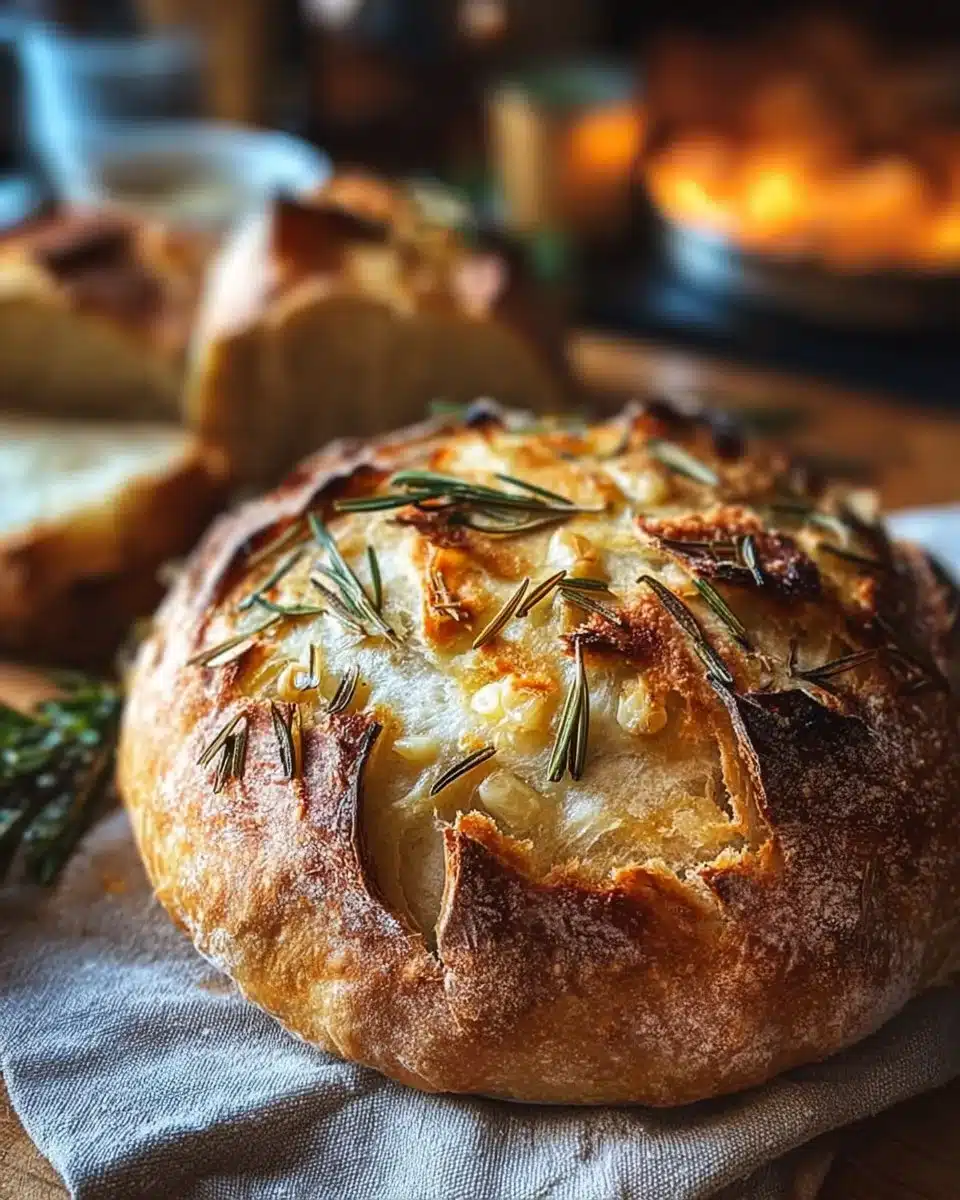
Mastering this bread requires attention to heat, steam, and timing. First, use a preheated baking stone or heavy pan to give the loaf a strong initial oven spring. Second, introduce steam in the first 10 minutes by pouring hot water into a lower oven pan or using an automated steam setting if your oven has one; steam keeps the crust pliable so the bread can rise fully. Third, watch the internal temperature: a perfectly baked artisan loaf reaches about 200–210°F (93–99°C) when done. Finally, rest the bread after baking; while it cools, the crumb continues to finish baking internally, and the texture becomes more open and flavorful.
Additional technique tips:
- Score with intention: Make shallow washes with a razor or lame; a single long slash or a cross creates beautiful expansion.
- Avoid over-kneading: While gluten development matters, over-kneading produces a tight crumb. Aim for elasticity but maintain some air pockets.
- Control moisture: If your dough feels sticky, add very small increments of flour; however, a slightly sticky dough produces a lighter crumb.
Common Mistakes to Avoid
- Using water that’s too hot: Hot water kills yeast, so always test water temperature before adding the yeast.
- Skipping the steam: Without steam, the crust forms too quickly and the loaf cannot rise fully.
- Overproofing: If dough doubles and then collapses, you likely overproofed it; bake sooner to preserve structure.
- Under-seasoning: Because bread needs salt to brighten flavors, taste your olive oil or roasted garlic and adjust accordingly.
- Cutting too early: Slicing hot bread releases steam and makes the crumb gummy; wait at least 30 minutes.
Health Benefits and Serving Suggestions
Nutritional Value of Rosemary & Roasted Garlic Artisan Bread
Rosemary & Roasted Garlic Artisan Bread supplies complex carbohydrates from flour and healthy fats from olive oil. Rosemary adds antioxidants and anti-inflammatory compounds, while roasted garlic offers allicin, which supports immune health and cardiovascular function. Although artisan bread remains a carbohydrate-rich food, pairing it with proteins, vegetables, and healthy fats creates a balanced meal. For a wholesome twist, use part whole-wheat flour for additional fiber and nutrients, but keep in mind that whole grains alter hydration and proofing times slightly.
Nutritional highlights:
- Antioxidants from rosemary (carnosic acid and rosmarinic acid)
- Heart-healthy monounsaturated fats from olive oil
- Prebiotic benefits from garlic when consumed regularly
- Option to boost fiber by substituting up to 25–30% whole-wheat flour
Best Ways to Serve and Pair This Dish
Serve this bread warm with simple olive oil and balsamic, or use it to build robust bruschettas. Moreover, toasted slices make excellent crostini bases for sautéed mushrooms or creamy ricotta. For a satisfying meal, pair the loaf with a rich tomato ragù or a vibrant salad; alternatively, enjoy it alongside this garlic-forward focaccia variant for a complementary texture: garlic rosemary focaccia muffins. Because the loaf holds up well, use it for sandwiches, panini, and bread boards with cheeses, cured meats, and pickles. Finally, for breakfast or brunch, serve thick slices with butter, honey, or an herbed cream cheese.
FAQ Section (SEO + NLP Style)
What type of mushrooms are best for Rosemary & Roasted Garlic Artisan Bread? I like to keep it earthy and balanced, so cremini or shiitake mushrooms work wonderfully when you fold sautéed mushrooms into the bread or serve them on top. Creminis offer a mild, meaty texture, while shiitakes add deeper umami; however, button mushrooms can also do the job if you’re on hand.
Can I use dried garlic instead of fresh? You can, but I recommend using roasted fresh garlic for the most mellow, caramelized flavor. If you must use dried garlic, rehydrate it briefly in warm water and reduce the quantity because dried garlic concentrates in flavor. Also, remember dried garlic won’t deliver the same silky texture that roasted cloves create inside the crumb.
How do I store leftover Rosemary & Roasted Garlic Artisan Bread? Store cooled bread in a paper bag or wrapped in a clean kitchen towel at room temperature for up to two days to keep the crust crisp. For slightly longer storage without freezing, keep the loaf in a loosely tied plastic bag to preserve softness, though this will soften the crust.
Can I freeze Rosemary & Roasted Garlic Artisan Bread? Yes—freeze whole loaves or slices in airtight bags for up to three months. Thaw at room temperature, and then re-crisp the crust in a 350°F oven for 10–12 minutes. Alternatively, toast slices straight from the freezer for quick breakfasts or sandwiches.
Conclusion
If you’re like me, you judge a kitchen by the smells it creates, and there’s something comforting about rosemary and roasted garlic filling the house. Trust me, you’ll want to make this again and again; each loaf carries memory, warmth, and the kind of flavor that gathers people around a table. Try it slowly, listen to the dough, and enjoy every crackle of the crust—after all, bread listens when you give it love.
Print
Rosemary & Roasted Garlic Artisan Bread
- Total Time: 45 minutes
- Yield: 1 large loaf or 2 small boules 1x
- Diet: Vegetarian
Description
This artisan bread combines bright rosemary and sweet roasted garlic for a comforting and flavorful loaf perfect for any occasion.
Ingredients
- 500 g bread flour (about 4 cups)
- 325–350 g warm water (1 1/3 to 1 1/2 cups)
- 2 tsp fine sea salt
- 2 tsp sugar or honey (optional)
- 2 1/4 tsp active dry yeast (one packet)
- 3 tbsp extra-virgin olive oil
- 3–4 tbsp roasted garlic paste (about 2–3 heads roasted)
- 2 tbsp fresh rosemary, finely chopped (plus extra sprigs for garnish)
- Flaky sea salt for finishing
Instructions
- Bloom the yeast: In a small bowl, stir the warm water with sugar and yeast. Let it sit for 5–8 minutes until foamy.
- Mix dry ingredients: In a large bowl, whisk the flour with salt and chopped rosemary. Create a well in the center.
- Combine wet and dry: Pour the yeast mixture and olive oil into the well. Stir with a wooden spoon until a shaggy dough forms.
- Knead and feel: Turn the dough onto a lightly floured surface and knead for about 8–10 minutes until smooth and elastic.
- First rise: Place the dough in an oiled bowl, cover with a damp towel, and let rise in a warm spot for 1–1.5 hours.
- Shape the loaf: Gently deflate the dough, shape it into a tight boule or oblong loaf.
- Second rise: Let the shaped loaf rise for 45–60 minutes.
- Preheat the oven: Preheat to 450°F (230°C) with a baking stone or pan inside.
- Score and steam: Score the loaf with a blade, create steam in the oven, and quickly close the door.
- Bake: Bake for 20–25 minutes until golden brown; for a crisper crust, bake an additional 3–5 minutes.
- Finish and rest: Remove from oven, brush with olive oil, sprinkle with sea salt and rosemary, and cool for at least 30 minutes before slicing.
Notes
Perfect for pairing with soups, salads, and bruschetta. Freeze for up to three months and re-crisp before serving.
- Prep Time: 15 minutes
- Cook Time: 30 minutes
- Category: Bread
- Method: Baking
- Cuisine: Italian
Nutrition
- Serving Size: 1 slice
- Calories: 200
- Sugar: 1g
- Sodium: 250mg
- Fat: 6g
- Saturated Fat: 1g
- Unsaturated Fat: 5g
- Trans Fat: 0g
- Carbohydrates: 35g
- Fiber: 2g
- Protein: 6g
- Cholesterol: 0mg
Keywords: artisan bread, rosemary, roasted garlic, baking, homemade bread
