
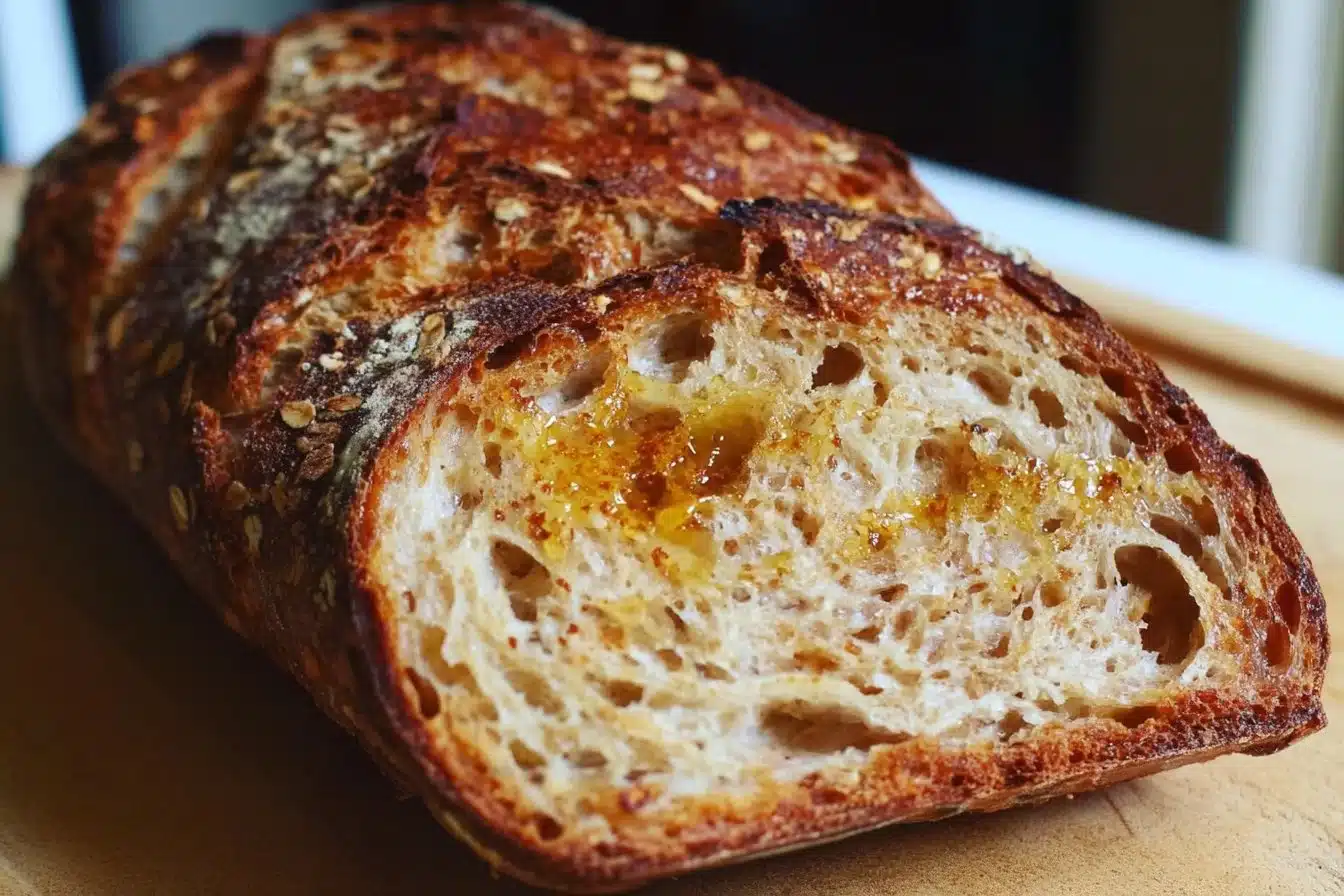
I remember the first time I coaxed a truly tender loaf from a stubborn starter and the kitchen smelled like warm honey and toasted oats. That morning I pulled a Soft and Chewy Honey Oat Sourdough Bread from the oven, and the crust sang while the crumb stayed pillowy; I felt a small, private victory. I wrote the steps on a napkin, sipped my coffee, and then shared a slice with my daughter as the fog rolled over the cove. If you love baked oat flavors and tender crumb as much as I do, you might also enjoy my soft chewy pumpkin oatmeal cookies, which echo that same comforting texture in cookie form.
Flavor and Popularity
The Unique Flavor Profile of Soft and Chewy Honey Oat Sourdough Bread
This loaf sings a duet between sweet and tangy. The sourdough starter provides a gentle, bright acidity that balances the honey’s floral sweetness, and oats add a soft, nutty layer. The crust browns to a buttery, golden hue while the crumb stays moist and chewy. Because I use a slightly higher hydration and a touch of honey, the crumb develops an open, tender structure that feels like a warm hug when you tear it apart. You will notice an earthy oat undertone, and if you toast a slice, the edges caramelize and develop almost savory, umami notes.
Why This Recipe Is a Family Favorite and Crowd-Pleaser
Families fall in love with this bread because it pairs with almost anything. Serve it with butter and jam for breakfast, use it for sandwiches at lunch, or present it alongside a hearty stew for dinner. My neighbors request it at potlucks because it keeps soft for days and slices cleanly for sandwiches. Moreover, the gentle sweetness of honey makes it appealing to children, while the sourdough complexity satisfies grown-up palates. Because it balances comfort and craft, this loaf becomes a kitchen staple.
Ingredients and Preparation
Essential Ingredients and Possible Substitutions
- Active sourdough starter (fed and bubbly) — the backbone of flavor. If you lack a mature starter, use a blend of commercial yeast and a preferment, but expect a different tang.
- Bread flour — for structure. You may substitute half with whole wheat for nuttiness, but reduce hydration slightly.
- Rolled oats — add chew and an earthy note. Quick oats work in a pinch, though texture changes.
- Honey — provides sweetness and browning. Maple syrup works as a substitute but alters the flavor slightly.
- Water — lukewarm, to wake the starter. Filtered tastes better.
- Salt — brings out the flavors. Use fine sea salt or kosher.
- Butter or oil — optional brush for a softer crust and richer mouthfeel. I prefer a light butter rub after baking.
Possible swaps and tips:
- For a dairy-free loaf, use olive oil instead of butter.
- For added herb aroma, fold in a tablespoon of chopped fresh rosemary or thyme before the final rise. The herbs complement the oats and honey and give a savory contrast.
- Add seeds like sunflower or flax for texture, but toast them first to boost their nuttiness.
Step-by-Step Recipe Instructions with Tips
Prepare the starter: Feed your starter 6–8 hours before mixing so it peaks and shows visible bubbles. Use starter at its active peak for best rise.
Autolyse the dough: Combine 400g bread flour, 100g rolled oats (reserve a tablespoon for topping), 50g honey, and 450g water. Mix until no dry flour remains. Let rest for 30–60 minutes. Autolyse helps strengthen the gluten and enhances chewiness.
Mix and salt: Add 150g active starter and 9g salt to the autolysed dough. Mix until the salt dissolves and the dough feels cohesive. Perform gentle kneads or folds until the dough gains elasticity.
Bulk fermentation and folds: Place dough in a lightly oiled bowl. Every 30 minutes for the first two hours, perform a set of stretch-and-folds to develop structure. Then let the dough continue fermenting until it increases by about 30–50% and shows small bubbles on the surface. Depending on room temperature, this may take 3–5 hours.
Shaping: Turn the dough onto a floured surface. Lightly shape it into a tight boule or batard, incorporating a handful of oats into the exterior for texture if you like. Tension in shaping helps achieve an even rise and a soft, uniform crumb.
Final proof: Place the shaped loaf into a floured banneton or bowl lined with a towel. Chill in the refrigerator for 8–12 hours for an overnight proof, which deepens flavor and improves digestibility. Alternatively, proof at room temperature for 2–4 hours if baking the same day.
Scoring and baking: Preheat your oven to 475°F (246°C) with a Dutch oven or baking stone inside. Score the loaf with a sharp blade. Bake covered for 20 minutes, then uncover and lower the temperature to 450°F (232°C) for another 20–25 minutes until the crust turns golden and sounds hollow when tapped.
Cooling: Let the bread cool for at least 1 hour before slicing. Cooling completes the crumb set and keeps the loaf soft and chewy.
Tips throughout the process:
- Use a digital scale for accuracy; baking relies on weight.
- Keep hydration consistent; oats absorb water, so if your dough feels dry, add 10–20g more water.
- For a softer crust, brush with melted butter as soon as the loaf leaves the oven.
- To build an herby aroma, sprinkle chopped fresh herbs into the dough before the final fold.
Cooking Techniques and Tips
How to Cook Soft and Chewy Honey Oat Sourdough Bread Perfectly
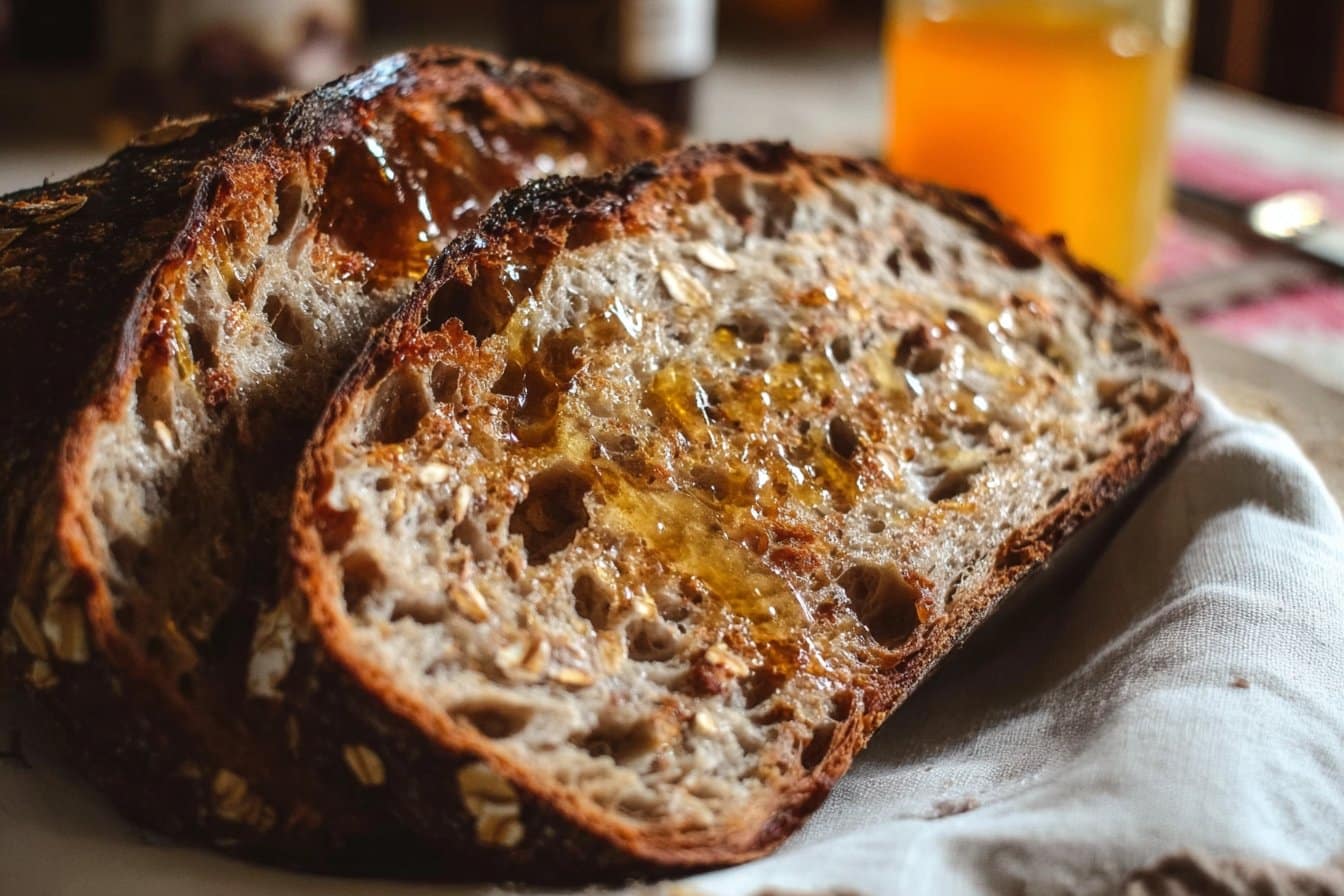
Temperature and steam determine crust and crumb. Start with a hot oven and trap steam during the first part of baking to ensure a crisp outer shell that yields to a soft interior. Use a Dutch oven, because it replicates a professional steam oven and gives a consistent rise. Score the loaf confidently to guide expansion. Also, manage time: a longer, slower bake at lower temperature will dry the crumb, so follow the covered/uncovered timeline.
Hydration affects chewiness: This recipe uses a relatively high hydration to encourage an open, soft crumb. Because oats soak up liquid, adjust water slightly; therefore weigh ingredients precisely and observe dough feel. When you see the dough pass the windowpane test during folding, stop; overworking can make the crumb tight.
Common Mistakes to Avoid
Underproofing: If the dough lacks sufficient fermentation, it will bake dense. Ferment until slightly puffy and aerated; finger-dent tests help — press gently and expect a slow rebound.
Overproofing: Conversely, keep watch. Overproofed loaves collapse and lose oven spring. Refrigeration during final proof reduces risk and builds flavor.
Too low heat: A cool oven yields a pale, dry crust and poor oven spring. Preheat thoroughly and bake at recommended temperatures.
Neglecting the starter: Using a weak starter leads to weak rise and bland flavor. Always feed your starter ahead of baking and use it at peak activity.
Health Benefits and Serving Suggestions
Nutritional Value of Soft and Chewy Honey Oat Sourdough Bread
This loaf balances whole-grain benefits with sourdough fermentation advantages. Oats deliver soluble fiber, which supports digestion and helps regulate blood sugar. Sourdough fermentation reduces phytic acid in flour, which increases mineral availability and may improve digestibility. Honey supplies natural sweetness and trace antioxidants, while moderate use keeps sugar low compared with commercial sweet breads. Because this bread uses fewer processed ingredients, it provides sustained energy and pairs well with nutrient-dense toppings like avocado or nut butter.
Best Ways to Serve and Pair This Dish
Serve slices warm with an herby compound butter for a simple, buttery breakfast. For savory meals, use this bread for sandwiches filled with sautéed mushrooms, melted gruyère, and fresh thyme — the earthy mushrooms complement the oats and the honey’s subtle sweetness. Also, this loaf shines as a side for creamy soups or a roasted vegetable skillet because it soaks up flavorful broths without falling apart. For brunch, try French-toast style slices soaked lightly in egg and milk; the oats add an irresistible texture and the sourdough tang cuts through the richness.
Because people ask for pairing ideas at gatherings, I sometimes bring a basket of thick slices with olive oil and flaky sea salt for dipping. Additionally, toasted shards with a smear of fig jam and ricotta make an elegant appetizer. If you want to replicate the cozy texture in treats, try my soft chewy pumpkin oatmeal cookies alongside a slice for dessert — the textures echo each other beautifully.
Frequently Asked Questions
What type of mushrooms are best for Soft and Chewy Honey Oat Sourdough Bread?
Use cremini or baby bella mushrooms for savory pairings because they offer a balanced, earthy flavor and firm texture. For a deeper umami hit, include a few shiitake caps; sauté them in butter with garlic and thyme to complement the honey-oat sweetness.
Can I use dried garlic instead of fresh?
Yes, you can use dried garlic when you need convenience, but fresh garlic releases brighter, more aromatic flavors when sautéed. If you use dried garlic, rehydrate it briefly in warm water and use slightly less by volume because dried versions concentrate flavor.
How do I store leftover Soft and Chewy Honey Oat Sourdough Bread?
Store whole loaves at room temperature in a linen bag or wrapped in a clean towel to preserve the crust while preventing moisture loss. For sliced bread, use a reusable bread bag and consume within 3 days for best texture. Avoid plastic if you want the crust to remain pleasant, because plastic traps moisture and makes the crust rubbery.
Can I freeze Soft and Chewy Honey Oat Sourdough Bread?
Absolutely. Slice the loaf and flash-freeze slices on a tray until firm, then transfer them to a freezer-safe bag. Toast straight from frozen or thaw at room temperature for an hour. Freezing preserves freshness for up to three months and makes weekday breakfasts effortless.
Conclusion
If you’re like me, you find comfort in the rhythm of feeding a starter and waiting for the dough to tell you when it’s ready. There’s something comforting about pulling a Soft and Chewy Honey Oat Sourdough Bread from the oven, about the steam that rises and the hush that falls over the kitchen. Trust me, you’ll want to make this again and again; it becomes more than a loaf — it becomes part of the weekend, part of the table, and part of the stories you share with people you love.
for more recipes followo me in facebook and pinterest

Best 5-Step Soft and Chewy Honey Oat Sourdough Bread
- Total Time: 75 minutes
- Yield: 1 loaf 1x
- Diet: Vegetarian
Description
A tender loaf of sourdough bread infused with honey and rolled oats, creating a sweet, tangy flavor with a soft, chewy texture.
Ingredients
- 400g bread flour
- 100g rolled oats (plus more for topping)
- 50g honey
- 450g lukewarm water
- 150g active sourdough starter
- 9g salt
- Butter or oil (for brushing, optional)
Instructions
- Prepare the starter: Feed your starter 6–8 hours before mixing until it shows visible bubbles.
- Autolyse the dough: Mix bread flour, rolled oats, honey, and water until combined. Let rest for 30–60 minutes.
- Mix and salt: Add active starter and salt to the dough. Mix until cohesive. Knead gently until elastic.
- Bulk fermentation: Place dough in oiled bowl. Perform stretch-and-fold every 30 minutes for the first two hours, then let ferment until increased by 30–50% (3–5 hours).
- Shape and proof: Shape dough into a boule or batard. Place in banneton and proof in the fridge overnight or at room temperature for 2–4 hours.
- Score and bake: Preheat oven to 475°F (246°C). Score the loaf and bake covered for 20 minutes, then uncover and lower temperature to 450°F (232°C) for another 20–25 minutes.
- Cool: Let the bread cool for at least 1 hour before slicing.
Notes
For a dairy-free option, substitute olive oil for butter. Consider adding herbs for flavor.
- Prep Time: 30 minutes
- Cook Time: 45 minutes
- Category: Bread
- Method: Baking
- Cuisine: American
Nutrition
- Serving Size: 1 slice
- Calories: 200
- Sugar: 5g
- Sodium: 350mg
- Fat: 3g
- Saturated Fat: 1g
- Unsaturated Fat: 2g
- Trans Fat: 0g
- Carbohydrates: 40g
- Fiber: 3g
- Protein: 7g
- Cholesterol: 5mg
Keywords: sourdough, bread, honey, oats, baking
