
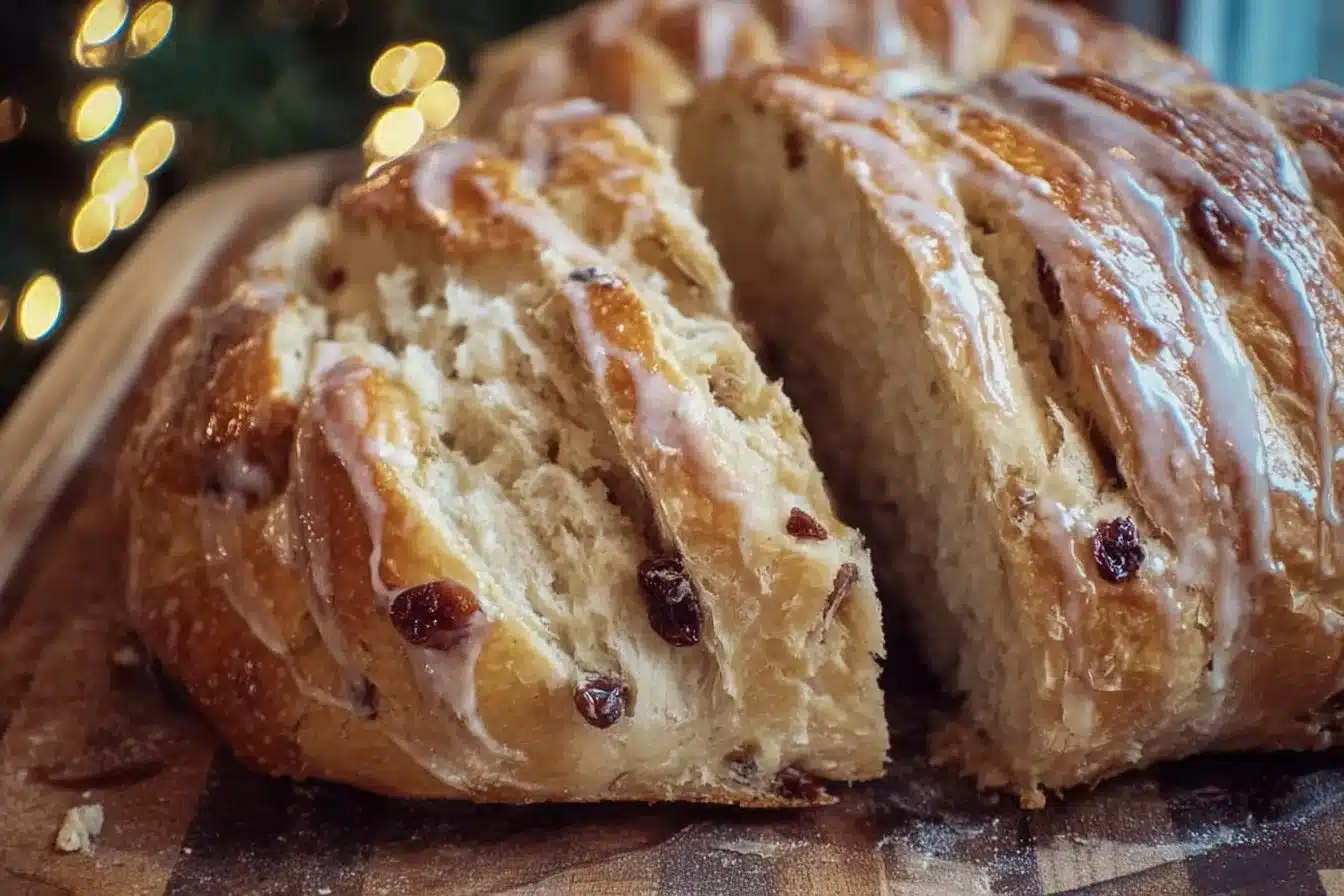
I still remember the first time I shaped a wreath of sourdough and tucked roasted garlic and herbs into its folds; that warm, yeasty scent became my signal that the holidays had truly arrived. Sourdough Christmas Bread climbed onto my counter that December like an old friend, and from the first slice I knew this loaf would join our family table every year. I labored over the crust and the tang, and then, simply, we ate it with butter and stories. If you want a festive loaf that sings of hearth and home, this Sourdough Christmas Bread will do just that, and it pairs especially well with a quick store-bought starter guide like this Aldi sourdough bread when you need a shortcut.
Flavor and Popularity
The Unique Flavor Profile of Sourdough Christmas Bread
Sourdough Christmas Bread blends tangy fermentation with rich, holiday spices and savory add-ins to create a loaf that tastes both classic and surprising. First, the lactic acidity from the starter gives the crumb a gentle tang, and then warm notes of cinnamon, orange zest, or star anise arrive to brighten the palate. Moreover, if you fold in sautéed mushrooms or caramelized onions, the loaf gains an earthy, umami depth that balances the sweetness. The crust caramelizes into a buttery, crackling shell, while the interior stays airy and tender, so every bite offers contrast. In short, this bread delights because it layers flavors instead of masking them.
Why This Recipe Is a Family Favorite and Crowd-Pleaser
Families love Sourdough Christmas Bread because it feels festive but remains familiar. Children recognize the warm, soft crumb; adults appreciate the complexity that the starter adds. In addition, the loaf works across menus: serve it as a sweet centerpiece with honey butter, or as a savory side dish alongside roast turkey. Because you can adapt the mix-ins, the bread pleases picky eaters and adventurous guests alike. Above all, the ritual of feeding the starter and shaping the loaf turns baking into a shared holiday memory that people return to year after year.
Ingredients and Preparation
Essential Ingredients and Possible Substitutions
- 500 g bread flour (or 450 g all-purpose + 50 g whole wheat for nuttiness)
- 150 g active sourdough starter, bubbly and fed (room temperature)
- 320–340 g water, lukewarm (adjust for humidity)
- 10 g fine sea salt
- 30 g unsalted butter, softened (or olive oil for a dairy-free option)
- 1 large egg (for egg wash; substitute milk for vegans)
- 1 tbsp honey or maple syrup (optional, for slight sweetness)
- Zest of one orange and 1 tsp ground cinnamon (for festive aroma)
- 1 cup sautéed mushrooms, caramelized onions, or toasted nuts — choose one or mix for texture and umami
If you prefer a purely sweet loaf, replace the savory add-ins with 1/2 cup dried cranberries and 1/2 cup chopped candied orange peel. Alternatively, fold in grated cheddar and chopped rosemary for a savory herb-and-cheese wreath. For urban bakers hunting for quality loaves or inspiration, check the guide to the best sourdough bread in Toronto to compare textures and crumb structures.
Step-by-Step Recipe Instructions with Tips
Prepare your starter at least 4–6 hours before beginning, so it reaches peak activity. First, autolyse the flour and water: mix the flour and 300 g of water until no dry flour remains, then let rest for 30–60 minutes. Next, add the starter, salt, and honey; mix until the dough comes together. Then, incorporate the remaining water, if needed, to reach a tacky, slightly sticky dough.
Perform a series of stretch-and-folds every 30 minutes for the first two hours to develop gluten. During the last fold, gently fold in your chosen add-ins—sautéed mushrooms and herbs for a savory loaf, or dried fruit and orange peel for sweet. After bulk fermentation, which should take 3–5 hours depending on room temperature, shape the dough into a round or a festive wreath. Place it in a floured banneton or lined bowl and cover. Retard the dough in the refrigerator overnight to deepen flavor.
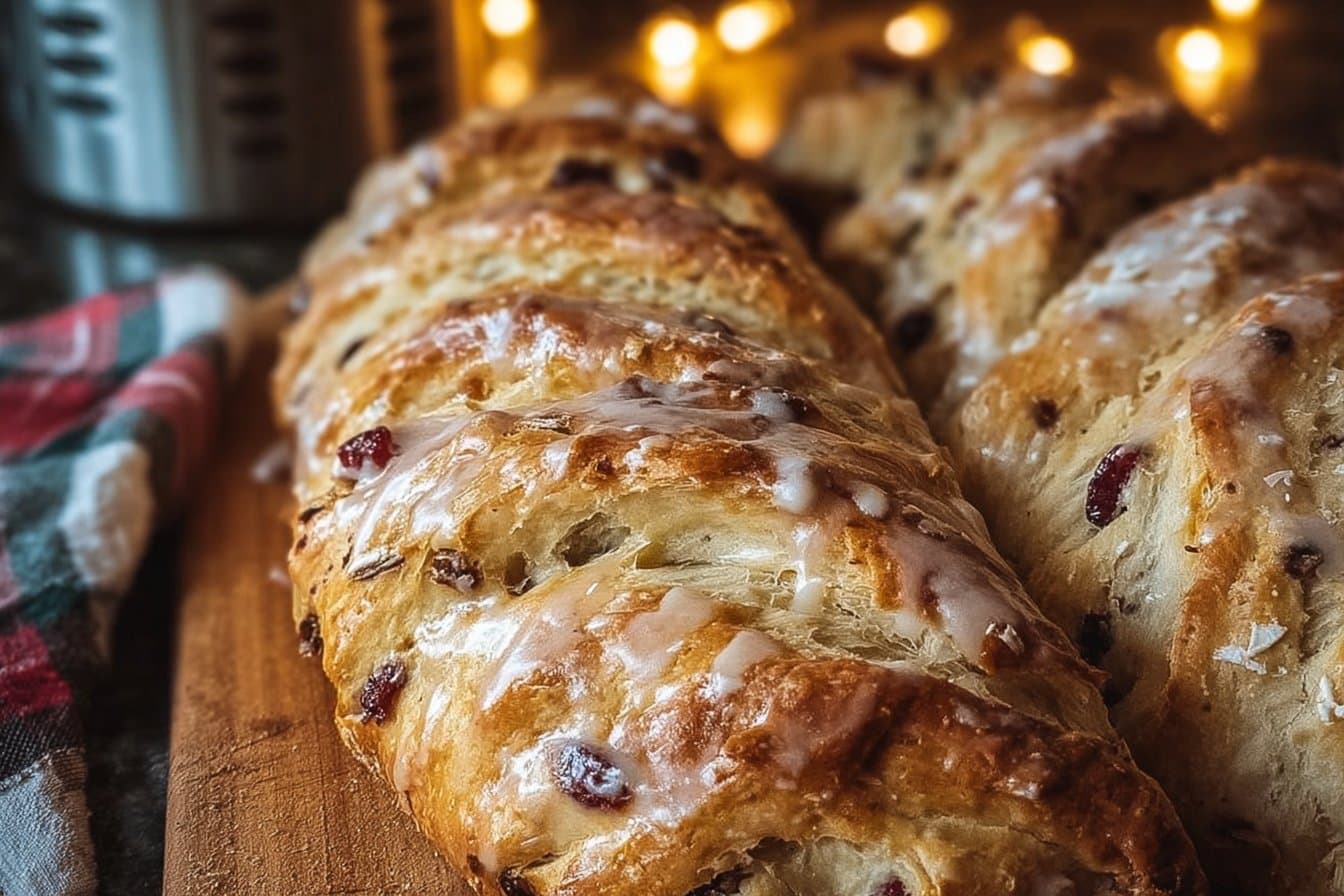
When ready to bake, preheat the oven to 475°F (245°C) with a Dutch oven or baking stone inside. Score the loaf with a sharp lame or knife to control expansion. For a wreath, score several shallow cuts around the ring. Place the dough into the preheated vessel, drop oven temperature to 450°F (230°C), and bake covered for 20 minutes. Then uncover and bake 15–25 minutes more, until the crust achieves a deep mahogany color and the interior registers 200–205°F (93–96°C). Remove the loaf and brush with melted butter or olive oil while hot to add a glossy, buttery finish.
Tips:
- Always weigh ingredients for precision; sourdough responds to small changes.
- Use a thermometer to confirm doneness; visual cues alone mislead.
- If your add-ins are wet (like mushrooms), cook them until most moisture evaporates; otherwise the crumb turns gummy.
Cooking Techniques and Tips
How to Cook Sourdough Christmas Bread Perfectly
First, patience matters. Sourdough rewards gentle handling and time, so respect the fermentation windows. Second, temperature controls everything: a warm room speeds bulk fermentation, so slow the process by chilling the dough if your kitchen heats up. Third, scoring affects bloom; cut with purposeful, confident strokes to guide oven spring. Additionally, use a preheated Dutch oven or skillet to mimic professional steam, which helps the crust blister and brown while the interior remains moist.
Use a baker’s peel or parchment to transfer the loaf safely. Otherwise, drop the loaf onto the hot surface too quickly and you risk deflating it. Finally, cool the bread fully before slicing. Although tempting, cutting early traps steam and yields a gummy crumb. Wait at least one hour, and then slice with a serrated knife for clean cuts.
Common Mistakes to Avoid
Many bakers overproof the dough by leaving it at room temperature too long; as a result, the loaf collapses in the oven. Conversely, underproofing yields a dense interior. To avoid both, perform the poke test: press the dough gently with a floured finger. If it springs back slowly and leaves a slight indent, it’s ready. If it snaps back quickly, ferment longer. If it barely moves, it’s overproofed.
Another frequent error lies in adding wet mix-ins straight from the pan. Always cool and drain sautéed ingredients and toss them in flour before folding into the dough, because otherwise they release moisture and weigh the dough down. Also, bakers sometimes skimp on salt; while it seems small, salt controls fermentation and enhances flavor. Lastly, don’t rush the bake. Lower the oven slightly after placing the loaf inside to prevent burning the crust before the interior reaches temperature.
Health Benefits and Serving Suggestions
Nutritional Value of Sourdough Christmas Bread
Sourdough fermentation offers more than flavor: it improves digestibility and increases mineral bioavailability. Naturally occurring lactic acid bacteria predigest some starches and reduce phytic acid, which helps release nutrients like iron and zinc. Therefore, sourdough ranks as gentler on the gut than many non-fermented breads. Of course, the precise nutritional profile depends on your mix-ins: add nuts and seeds for healthy fats and protein, or choose whole grain flours for extra fiber. Keep portions sensible during holiday feasts, and balance the bread with protein-rich mains and bright, acidic sides to offset the richness.
Best Ways to Serve and Pair This Dish
Sourdough Christmas Bread shines with simple accompaniments. Serve warm with salted butter and a drizzle of honey for a classic pairing. Alternatively, transform slices into a savory bruschetta: top toasted rounds with ricotta, sautéed mushrooms, and a scatter of thyme. For a holiday centerpiece, hollow a small loaf and fill it with a rich, creamy stew so guests can tear off pieces like a rustic spoon. Additionally, pair the loaf with roasted root vegetables, smoked salmon, or a crisp winter salad dressed in citrus vinaigrette to balance the buttery notes.
If you enjoy skillet-style presentations, slice the bread and briefly toast slices in a skillet with garlic butter to make a sumptuous side for soups; the sautéed garlic lifts the bread’s aroma and creates a pleasing umami finish. Above all, serve the bread at room temperature or just-warm; the flavors mature as it cools, and guests will appreciate both texture and complexity.
FAQ
What type of mushrooms are best for Sourdough Christmas Bread?
Cremini or shiitake mushrooms work exceptionally well because they deliver earthy flavor and hold up during cooking. Moreover, oyster mushrooms add a delicate texture, while porcini (soaked and chopped) bring deep, woody notes. Always sauté until browned and most moisture evaporates, and then cool before folding into the dough to prevent a soggy crumb.
Can I use dried garlic instead of fresh?
Yes, but I recommend fresh garlic for the brightest flavor, especially when roasting or sautéing it before adding to the bread. If you must use dried garlic, rehydrate it briefly in a little warm water and taste, because dried forms concentrate differently and sometimes carry a bitter edge. Therefore, adjust quantities and combine with herbs to round out the flavor.
How do I store leftover Sourdough Christmas Bread?
Wrap cooled slices in a clean tea towel or place them in a paper bag to preserve the crust for up to two days at room temperature. For longer storage, place slices in a breathable container in the refrigerator for up to a week, although refrigeration can dry the loaf. To refresh a stale slice, sprinkle it with water and reheat briefly in the oven or toaster; this revives the crust and restores tenderness.
Can I freeze Sourdough Christmas Bread?
Absolutely. Freeze whole loaves or individual slices in airtight freezer bags for up to three months. First, cool the bread completely, then double-wrap in plastic and foil or use vacuum-sealed bags. Thaw at room temperature or reheat directly from frozen in a 350°F (175°C) oven until warmed through, which preserves both texture and flavor.
Conclusion
If you’re like me, you find that holiday baking heals a restless winter heart, and there’s something comforting about a loaf that smells of citrus, spice, and slow fermentation. Trust me, you’ll want to make this Sourdough Christmas Bread again and again, because each bake teaches you a small lesson about patience and pleasure. So feed your starter, gather your favorite add-ins, and let the oven do the rest—your family will gather, and the bread will tell the story.
Print
Delicious Sourdough Christmas Bread
- Total Time: 300 minutes
- Yield: 1 large loaf 1x
- Diet: Vegetarian
Description
A festive and flavorful sourdough bread that blends tangy fermentation with rich holiday spices and savory ingredients.
Ingredients
- 500 g bread flour (or 450 g all-purpose + 50 g whole wheat)
- 150 g active sourdough starter, bubbly and fed
- 320–340 g water, lukewarm
- 10 g fine sea salt
- 30 g unsalted butter, softened (or olive oil)
- 1 large egg (for egg wash; substitute milk for vegans)
- 1 tbsp honey or maple syrup (optional)
- Zest of one orange
- 1 tsp ground cinnamon
- 1 cup sautéed mushrooms, caramelized onions, or toasted nuts
Instructions
- Prepare your starter at least 4–6 hours before beginning.
- Autolyse the flour and 300 g of water, mixing until no dry flour remains and rest for 30–60 minutes.
- Add the starter, salt, and honey; mix until the dough comes together.
- Incorporate remaining water to achieve a tacky, slightly sticky dough.
- Perform a series of stretch-and-folds every 30 minutes for the first two hours.
- During the last fold, gently fold in your chosen add-ins.
- Bulk ferment the dough for 3–5 hours depending on room temperature.
- Shape the dough into a round or festive wreath and place in a floured banneton.
- Retard the dough in the refrigerator overnight.
- Preheat the oven to 475°F (245°C).
- Score the loaf and place it into the preheated Dutch oven, then drop the temperature to 450°F (230°C).
- Bake covered for 20 minutes, then uncover and bake for 15–25 minutes more.
- Remove the loaf, brush with melted butter or olive oil while hot.
Notes
Use a thermometer to confirm doneness. Allow the bread to cool fully before slicing.
- Prep Time: 240 minutes
- Cook Time: 60 minutes
- Category: Bread
- Method: Baking
- Cuisine: American
Nutrition
- Serving Size: 1 slice
- Calories: 250
- Sugar: 2g
- Sodium: 200mg
- Fat: 8g
- Saturated Fat: 4g
- Unsaturated Fat: 3g
- Trans Fat: 0g
- Carbohydrates: 36g
- Fiber: 2g
- Protein: 7g
- Cholesterol: 30mg
Keywords: sourdough bread, holiday baking, Christmas bread, festive bread, homemade bread
