
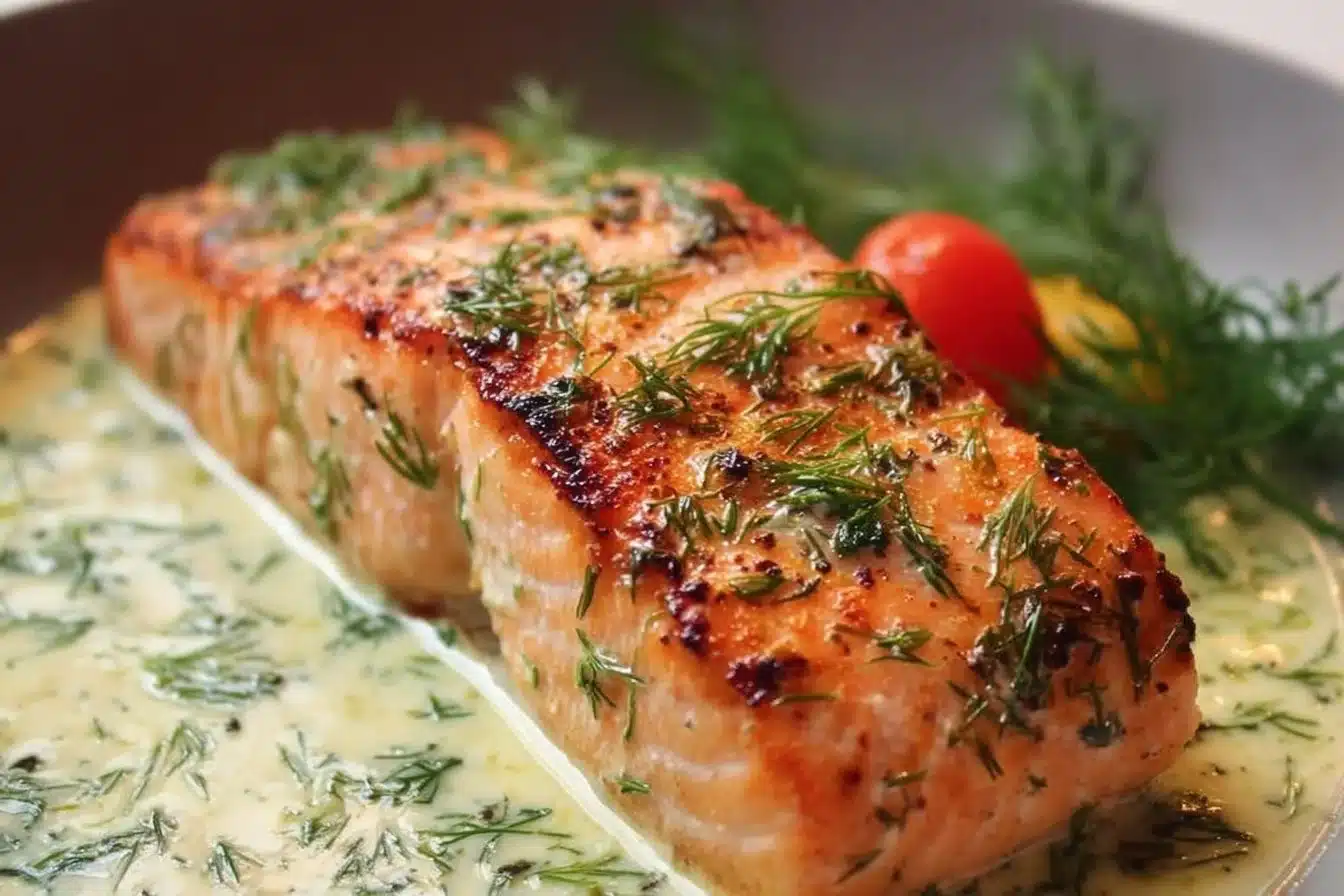
Hi. The first time I made Creamy Dill Salmon, the fog pressed against my windows and the kitchen smelled like lemon and butter; I remember thinking the world outside could stay soft and grey while I coaxed warmth from a skillet. Creamy Dill Salmon became my quiet Sunday ritual, and from that first golden sear to the tang of fresh dill, it felt like the sea and my pantry had a conversation in the pan. I learned to trust gentle heat and patient stirring, and along the way I bookmarked recipes like my neighbor’s cozy creamy mushroom pastina for side-dish inspiration, which often appears at my table when company drops by.
Flavor and Popularity
The Unique Flavor Profile of Creamy Dill Salmon
Creamy Dill Salmon balances richness and brightness in a way that feels both elegant and utterly homey. The salmon brings an oily, umami backbone while cream adds a silky, buttery mouthfeel. Meanwhile, dill cuts through the richness with its grassy, citrusy notes, and a splash of lemon lifts the whole dish. When you sear the fish first, you introduce Maillard browning — caramelized, savory edges that contrast with the smooth sauce. Additionally, if you sauté shallots or garlic in the pan, they give an earthy sweetness that anchors the flavors.
Because this combination blends textures and aromatics so harmoniously, people often call it comforting yet refined. As a result, Creamy Dill Salmon works well for quick weeknights and celebratory dinners alike. It feels special, yet it doesn’t require fuss.
Why This Recipe Is a Family Favorite and Crowd-Pleaser
Families and dinner guests tend to love Creamy Dill Salmon because it delivers a recognizable, satisfying bite that also feels a little luxurious. The cream and butter make it approachable for children, while the herb-forward profile satisfies more adventurous eaters. Moreover, salmon cooks quickly, which makes it ideal for busy cooks who still want a memorable meal.
You can easily tweak the recipe to suit diets and tastes: swap full-fat cream for Greek yogurt or crème fraîche for tang; use less butter if you want a lighter dish; or add capers for briny pops. Because it adapts so well and keeps well as leftovers, this recipe often becomes a repeat in home kitchens.
Ingredients and Preparation
Essential Ingredients and Possible Substitutions
- Salmon fillets (6–8 ounces each), skin-on preferred for texture and flavor. Alternatively, use trout if you prefer a delicate fish.
- Unsalted butter and a splash of olive oil for the pan. Butter gives the sauce its buttery mouthfeel; however, use all olive oil for a dairy-free version.
- Shallots or red onion, finely chopped; they melt into the sauce and add subtle sweetness.
- Fresh garlic, minced. Fresh garlic yields the brightest flavor, although dried garlic can substitute in a pinch (see FAQ).
- Heavy cream or half-and-half: choose heavy cream for the creamiest sauce, and half-and-half if you want a lighter finish.
- Fresh dill, chopped. Dill must remain fresh; dried dill lacks that piney, citrus brightness.
- Lemon juice and zest to sharpen the sauce.
- Salt and freshly ground black pepper.
- Optional: capers, a splash of white wine or dry vermouth, and a handful of chopped parsley for color.
- Suggested sides: buttery mashed potatoes, roasted root vegetables, or a simple buttered pasta. For a richer pairing, try a complementary creamy side like a creamy air fryer pumpkin gnocchi bake.
Step-by-Step Recipe Instructions with Tips
Start by patting the salmon dry and seasoning it well with salt and pepper; dry flesh sears better, so blot it with paper towels. Heat a heavy skillet over medium-high heat and add a tablespoon of oil plus a knob of butter; heat until the butter foams. Place the salmon skin-side up first if you prefer crispy skin, and then sear for 2–4 minutes until a golden crust forms. Flip and reduce heat; cook for another 2–4 minutes depending on thickness, until the salmon reaches your preferred doneness. Remove the fish to a plate and tent with foil to keep it warm.
In the same skillet, add a touch more butter and gently sauté the shallots until translucent, about 2 minutes; then add minced garlic and cook briefly until fragrant, taking care not to burn it. Deglaze the pan with a splash of white wine or a tablespoon of lemon juice, scraping up browned bits, because those bits carry concentrated flavor. Next, pour in the cream and bring it to a gentle simmer; reduce slightly until the sauce coats a spoon. Add chopped fresh dill and lemon zest, then season to taste with salt and pepper. If you like briny accents, stir in capers at the end.
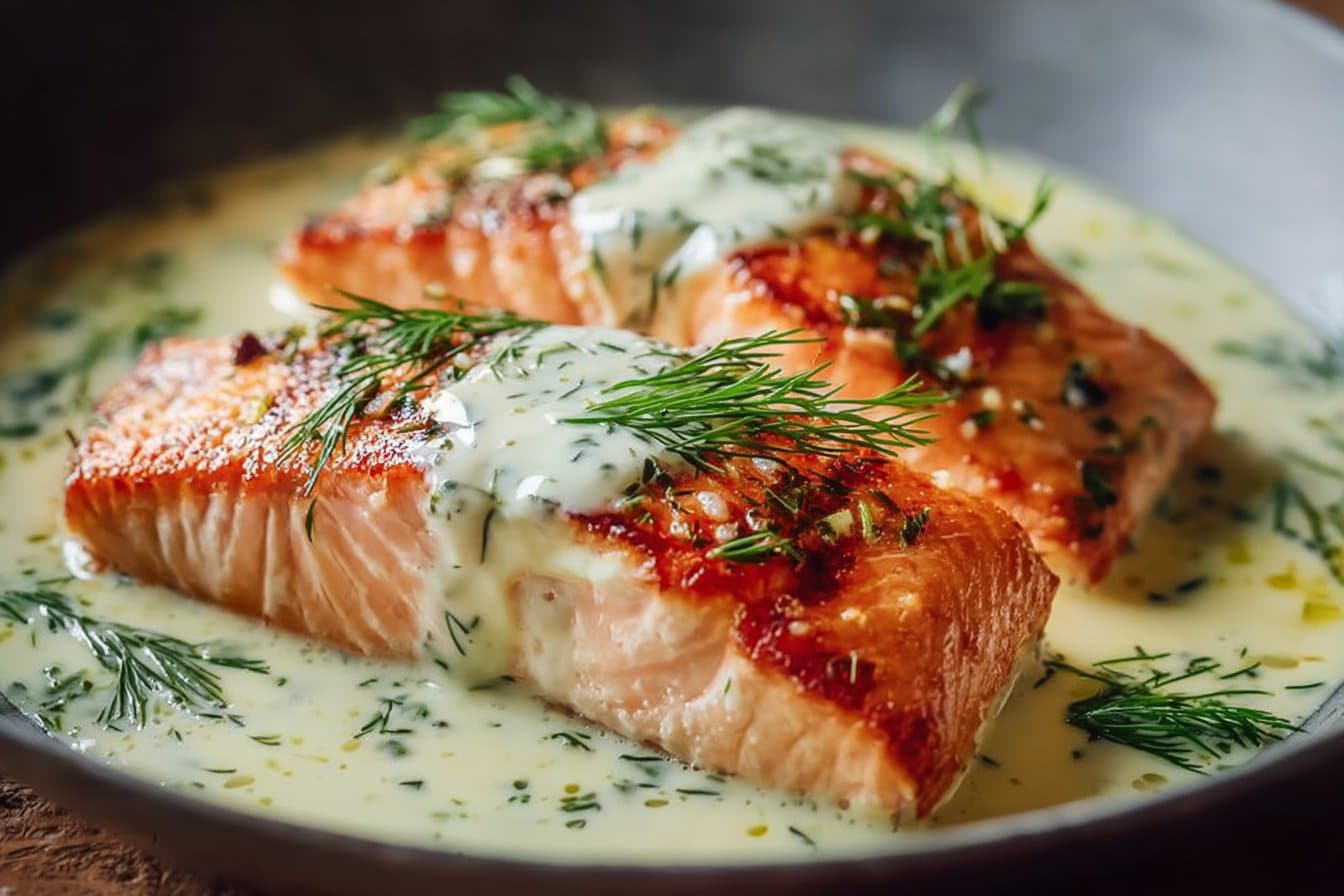
Return the salmon skin-side down to the skillet and spoon the sauce over each fillet; warm through for a minute or two. Finally, finish with an extra scatter of fresh dill and a squeeze of lemon before serving. For a silky, clingy sauce, use full-fat cream and finish with a small pat of butter. Meanwhile, if your salmon is thick, finish in a 350°F oven for 5–8 minutes after searing to ensure even cooking.
Timing tips: prepare your sides while the fish rests, and measure ingredients before you start so the sauce comes together quickly. Also, use a heavy-bottomed skillet to maintain even heat and avoid hot spots that can scorch the cream.
Cooking Techniques and Tips
How to Cook Creamy Dill Salmon Perfectly
Searing is the single most important technique for building flavor. First, ensure the pan is hot and the fish dry. Next, don’t crowd the pan; leave room so the steam escapes and a proper crust forms. Use medium-high heat for the first sear, then lower it to medium to finish the fish and form the sauce without breaking down the cream.
Another technique is to baste the fish while searing. Spoon the foaming butter over the top of the fillets for the first minute to encourage even cooking. Use an instant-read thermometer to check for doneness: 125–130°F gives you medium-rare, while 135°F results in a firmer, flakier texture.
Finally, let the salmon rest briefly after cooking. Resting allows the juices to redistribute and keeps the fish tender. Meanwhile, finish the sauce undisturbed so it reduces and thickens naturally.
Common Mistakes to Avoid
Avoid overcrowding the pan because it will steam the fish instead of searing it. Also, do not add heavy cream to a scorching pan; instead, lower the heat and then deglaze to prevent the cream from splitting. Overcooking salmon remains the most common error — it cooks fast, so watch closely and use a thermometer. Lastly, don’t skimp on fresh dill or lemon; those bright notes pull the dish together and prevent it from feeling too rich.
Health Benefits and Serving Suggestions
Nutritional Value of Creamy Dill Salmon
Salmon offers high-quality protein and omega-3 fatty acids, which support heart and brain health. Additionally, it provides vitamin D, B vitamins, and selenium. While the sauce adds calories through cream and butter, you can easily reduce fat by using half-and-half or replacing cream with Greek yogurt stirred in off heat for a tangy, lighter finish. Herbs like dill contribute negligible calories yet add antioxidants and flavor, which helps you enjoy nutrient-dense meals without over-relying on salt.
If you want a lower-carb option, serve the salmon over sautéed greens or cauliflower puree instead of potatoes. Conversely, if you need to feed a crowd, pair the salmon with hearty sides to stretch the meal while keeping it satisfying.
Best Ways to Serve and Pair This Dish
Serve Creamy Dill Salmon with soft, buttery mashed potatoes or a simple lemon-buttered pasta that will soak up the sauce. For a lighter pairing, try steamed asparagus, sautéed spinach, or a bright fennel and citrus salad. Consider textures: crispy roasted potatoes add crunch, while a silky risotto enhances the creaminess. For wine pairings, choose a crisp Sauvignon Blanc or a lightly oaked Chardonnay to match the herbaceous and buttery notes.
If you plan a themed menu, try a roasted vegetable medley followed by this salmon, and finish with a citrus tart for a clean, bright finish. Also, the dish pairs wonderfully with earthy mushroom sides and creamy pastas, so keep that in mind when planning multi-course meals.
FAQ Section
What type of mushrooms are best for Creamy Dill Salmon?
I prefer cremini or shiitake mushrooms because they offer a firm texture and earthy, umami depth that balances the salmon’s richness. However, chanterelles or porcini add a woodsy elegance, while button mushrooms work well for a milder flavor.
Can I use dried garlic instead of fresh?
Yes, you can use dried garlic in a pinch, but fresh garlic provides a brighter, more aromatic flavor. If you use dried garlic powder, start with a small amount — about 1/4 teaspoon per clove — and add it early in cooking so it hydrates and integrates into the sauce.
How do I store leftover Creamy Dill Salmon?
Cool the salmon to room temperature within two hours, then store it in an airtight container in the refrigerator for up to 2 days. Keep the sauce and fish together if you plan to reheat gently; however, for best texture, store sauce separately if you expect to reheat in the microwave.
Can I freeze Creamy Dill Salmon?
Freezing is possible but not ideal for cream-based sauces, as they can separate upon thawing. If you must freeze, wrap the salmon tightly and freeze for up to 1 month. Thaw overnight in the refrigerator and reheat gently in a low oven, stirring the sauce slowly and adding a splash of cream or stock to bring it back together.
Conclusion
If you’re like me, you want food that comforts the soul and still tastes like a small, deliberate pleasure. There’s something comforting about the way the cream clings to forkfuls of flaky salmon while dill and lemon brighten every bite. Trust me, you’ll want to make this again and again — for quiet nights when you need solace and for the Sundays when friends crowd the kitchen and the table feels warm. Try it, adjust it to your pantry, and let the simple ritual of searing and stirring become part of your own kitchen story.
for more recipes followo me in facebook and pinterest

Creamy Dill Salmon
- Total Time: 30 minutes
- Yield: 4 servings
- Diet: Paleo
Description
Creamy Dill Salmon is a comforting dish that beautifully balances richness and brightness with a silky sauce, enhanced by fresh dill and lemon.
Ingredients
- Salmon fillets (6–8 ounces each), skin-on preferred
- Unsalted butter
- Olive oil
- Shallots or red onion, finely chopped
- Fresh garlic, minced
- Heavy cream or half-and-half
- Fresh dill, chopped
- Lemon juice and zest
- Salt and freshly ground black pepper
- Optional: capers, a splash of white wine or dry vermouth, chopped parsley
Instructions
- Pat the salmon dry and season with salt and pepper.
- Heat a heavy skillet over medium-high heat and add oil and butter until foaming.
- Sear the salmon skin-side up for 2–4 minutes until golden, then flip and cook for another 2–4 minutes until desired doneness.
- Remove salmon and tent with foil to keep warm.
- In the same skillet, add more butter and sauté shallots for 2 minutes until translucent, then add garlic and cook briefly.
- Deglaze the pan with wine or lemon juice, scraping up browned bits.
- Pour in cream and bring to a gentle simmer until the sauce coats a spoon.
- Add dill and lemon zest, seasoning to taste with salt and pepper.
- Return salmon to skillet, skin-side down, and spoon sauce over fillets, warming through.
- Garnish with more dill and a squeeze of lemon before serving.
Notes
Serve with buttery mashed potatoes, roasted root vegetables, or a simple buttered pasta. Adjust fat content by using half-and-half or Greek yogurt if desired.
- Prep Time: 15 minutes
- Cook Time: 15 minutes
- Category: Main Course
- Method: Searing
- Cuisine: American
Nutrition
- Serving Size: 1 serving
- Calories: 400
- Sugar: 3g
- Sodium: 450mg
- Fat: 20g
- Saturated Fat: 10g
- Unsaturated Fat: 8g
- Trans Fat: 0g
- Carbohydrates: 5g
- Fiber: 1g
- Protein: 30g
- Cholesterol: 70mg
Keywords: salmon, creamy, dill, seafood, dinner, comfort food
