
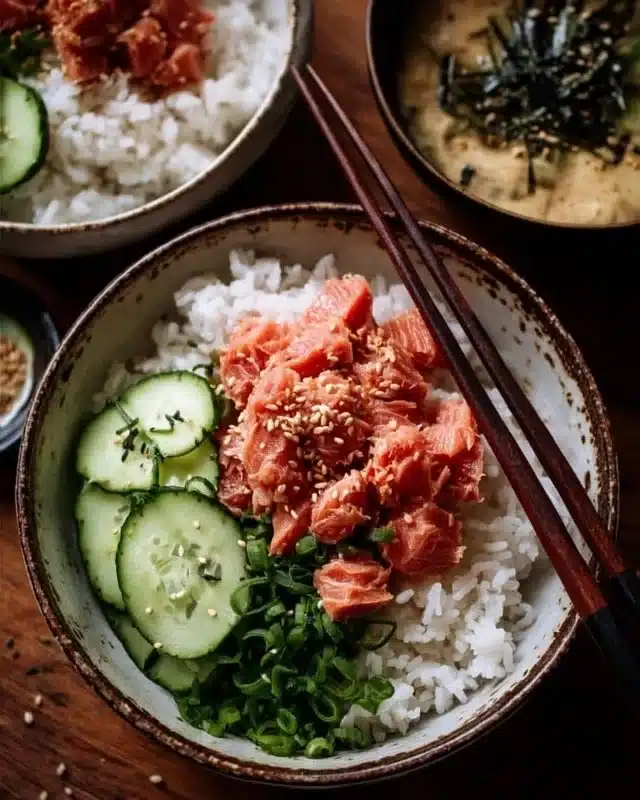
The first time I made Tuna Rice Bowls I stood at my kitchen window watching fog roll in off the Pacific, and the citrusy steam of soy and sesame filled the room as if someone had bottled the shore. I mixed bright scallions, a splash of mirin, and tuna that I had seared just long enough to keep the center blush-pink, and I felt strangely content — like a tide pulling me back to the table. Since then, Tuna Rice Bowls have become my quick comfort on windy nights; moreover, they feed a family, travel well, and calm the restlessness a long day leaves behind. If you want another weeknight bowl that feeds a crowd, try my take on easy French onion chicken bowls with wild rice, which leans into caramelized sweetness.
Flavor and Popularity
The Unique Flavor Profile of Tuna Rice Bowls
Tuna Rice Bowls balance umami, acid, and texture in a single spoonful. First, you get the silky, almost buttery tuna; next, the warmth of toasted sesame oil and soy sauce; then, the bright snap of pickled ginger or a squeeze of lime. Meanwhile, a bed of steaming short-grain rice holds everything together, and crunchy vegetables add contrast. Therefore, each bite delivers savory depth and a clean finish, and that contrast explains why people return to this dish again and again. Besides, you can tweak the flavors easily: add heat with chili oil, play with smokiness by using seared tuna, or bring in an herbal lift with cilantro or shiso leaves.
Why This Recipe Is a Family Favorite and Crowd-Pleaser
Families and casual dinner guests love Tuna Rice Bowls because you can customize every bowl without fuss. For instance, set out toppings like sliced avocado, crispy shallots, and soy-marinated cucumbers, and everyone builds their ideal mix. Also, the recipe cooks quickly, so you don’t sacrifice home-cooked flavor for time. Because the components keep well, you can prepare parts ahead: cook the rice and whip up a marinade the night before. Consequently, this recipe works for weeknight dinners, potlucks, or a calm Sunday supper where you want simplicity and elegance on the same plate.
Ingredients and Preparation
Essential Ingredients and Possible Substitutions
- Sushi-grade tuna steaks, 1–1.5 pounds total (substitute: canned tuna in oil for a pantry-friendly bowl, though texture differs)
- Short-grain or medium-grain rice, 2 cups cooked (substitute: brown rice or cauliflower rice for a heartier or low-carb option)
- Soy sauce, 3 tablespoons (substitute: tamari for gluten-free)
- Toasted sesame oil, 1 teaspoon
- Mirin or dry sherry, 1 tablespoon (substitute: rice vinegar plus a pinch of sugar)
- Fresh garlic and ginger, finely grated (substitute cautiously with 1/4 teaspoon dried garlic powder per clove, though fresh gives brightness)
- Scallions, thinly sliced
- Sesame seeds, toasted
- Avocado, sliced, and pickled ginger for garnish
- Optional: chili paste, sriracha, or chili oil for heat; nori strips for added umami; sautéed mushrooms for earthy depth
For mushrooms, try shiitake or cremini: they bring an earthy, meaty note that pairs well with tuna’s clean flavor. Meanwhile, keep ingredients fresh and season boldly, because rice needs a strong partner.
Step-by-Step Recipe Instructions with Tips
Ingredients (serves 4)
- 2 cups short-grain rice, rinsed and cooked
- 3 tuna steaks (about 6 oz each), sushi-grade if serving rare
- 3 tablespoons soy sauce
- 1 tablespoon mirin
- 1 teaspoon toasted sesame oil
- 1 tablespoon fresh ginger, grated
- 1 clove garlic, minced
- 1 tablespoon neutral oil for searing (canola or grapeseed)
- 1 avocado, sliced
- 3 scallions, thinly sliced
- 1 tablespoon sesame seeds, toasted
- 1 small cucumber, thinly sliced and lightly salted
- Pickled ginger, to taste
- Optional: chili oil or sriracha
Directions
- Prepare the rice first so it stays warm. Cook according to package instructions, then fluff with a fork. Also, keep a small bowl of rice vinegar and salt handy to season if desired.
- Whisk soy sauce, mirin, sesame oil, ginger, and garlic in a shallow bowl to make the marinade. Marinate half of the mixture with the tuna for 10–15 minutes while you prep the vegetables. Meanwhile, reserve the remaining marinade to dress the rice or use as a finishing sauce.
- Heat a heavy skillet or cast-iron pan over medium-high heat until it smokes slightly. Add neutral oil, then sear the tuna steaks 1–2 minutes per side for rare, or longer for medium. Press gently so each side gets an even crust. Next, remove the tuna and let it rest for a few minutes; this step locks in the juices.
- While the tuna rests, toss cucumbers and scallions with a pinch of salt and a teaspoon of rice vinegar; this quick pickle brightens the bowl. Also, slice the avocado and toast the sesame seeds in a dry pan for 1–2 minutes until fragrant.
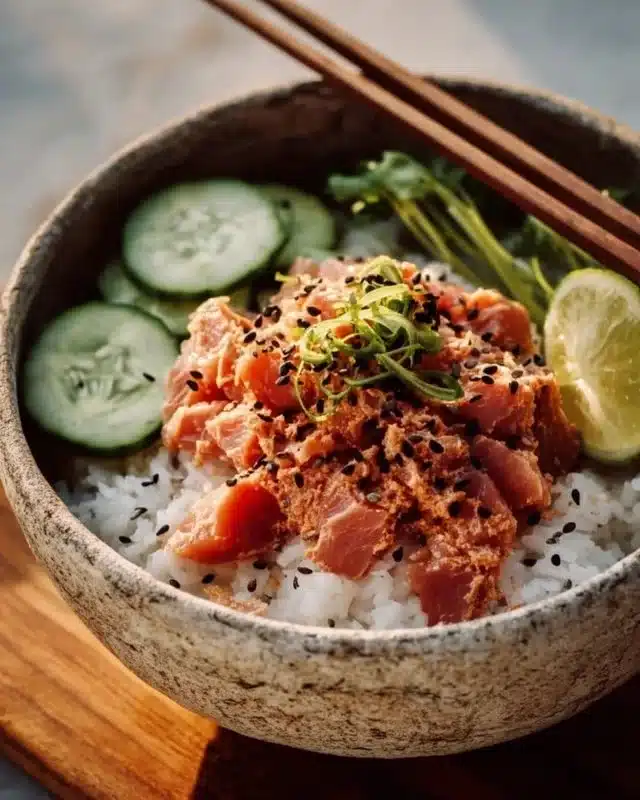
- Slice the tuna against the grain into thick ribbons and assemble bowls: a bed of warm rice, a mound of tuna slices, avocado, cucumbers, scallions, sesame seeds, and pickled ginger. Finally, drizzle reserved marinade and a few drops of chili oil if you like heat.
Tips
- Use a hot pan for a proper sear, and avoid overcooking to preserve a buttery center.
- Let the tuna rest before slicing to keep it tender.
- Adjust saltiness by tasting the marinade before it touches the fish.
- For a creamy texture, add a dollop of mayo mixed with a little sriracha and lemon.

Cooking Techniques and Tips
How to Cook Tuna Rice Bowls Perfectly
Searing tuna takes less time than most people expect. First, pat the steaks dry; moisture prevents a golden crust. Then, preheat the skillet until it releases a thin wisp of smoke; in this way, you ensure Maillard reaction and a savory, slightly caramelized exterior. Next, sear quickly: one to two minutes per side for rare, three to five minutes for medium depending on thickness. Besides, slice against the grain to keep each bite tender. Meanwhile, get the rice right: use short-grain rice for stickiness, rinse it well to remove excess starch, and rest it covered for five minutes after cooking. As a result, the rice will cradle the tuna without falling apart.
Common Mistakes to Avoid
- Overcooking the tuna. Tuna becomes dry quickly, so rely on quick sears and visual cues.
- Skimping on acid. Acid brightens the bowl, therefore include lime, vinegar, or pickled elements.
- Underdressed rice. Rice needs seasoning because it forms most of the base; consequently, drizzle a bit of seasoned soy or rice vinegar before plating.
- Crowding the pan. Work in batches to maintain a hot surface for searing.
- Using low-quality fish for seared preparations. For rare or medium-rare tuna, buy the best you can find or use sushi-grade for safety and texture.
Health Benefits and Serving Suggestions
Nutritional Value of Tuna Rice Bowls
Tuna offers a rich lean-protein source and abundant omega-3 fatty acids, which support heart health and brain function. Moreover, paired with rice and vegetables, the bowl gives a balanced meal: carbohydrates for energy, protein for repair, and fiber from veggies for digestion. If you choose brown rice or add sautéed mushrooms and leafy greens, you increase fiber and micronutrients. Also, use avocado for healthy monounsaturated fats, and prefer low-sodium soy or tamari if you watch your salt intake. Overall, a Tuna Rice Bowl provides satisfying nutrition without heavy calories.
Best Ways to Serve and Pair This Dish
Serve Tuna Rice Bowls with bright, crisp sides. For example, a simple seaweed salad or lightly sautéed greens in garlic complements the bowl’s umami. Alternatively, serve a citrusy cucumber salad to cut through the richness. If you want heartier pairings, roasted root vegetables or a buttery skillet corn with herbs will work beautifully. For a creative twist, serve the tuna over warm quinoa or farro to add a nutty texture. Also, you can pair this dish with chilled sake or a dry white wine; both bring out the fish’s clean flavors. For more stuffed and savory bowl inspiration that translates well to weeknight cooking, consider this riff on easy chicken and rice stuffed peppers, which shows how grains and protein cozy up in one vessel.
FAQ Section
What type of mushrooms are best for Tuna Rice Bowls?
Shiitake and cremini work best because they add an earthy, meaty note that pairs with tuna’s clean taste. Also, you can slice them thin and sauté in a little sesame oil with garlic so they release umami and complement the bowl without overpowering the fish.
Can I use dried garlic instead of fresh?
Yes, you can use dried garlic in a pinch, but fresh garlic gives the bowl a brighter, sharper edge. Therefore, if you must use dried garlic, use about one-quarter the amount of fresh and add it earlier in the cooking so it rehydrates and loosens its flavor.
How do I store leftover Tuna Rice Bowls?
Store components separately when possible: keep rice and tuna in airtight containers in the fridge for up to 2 days, and store fresh toppings like avocado separately to avoid browning. Also, refrigerate any sauces or dressings in small jars and reheat rice gently with a splash of water to restore moisture.
Can I freeze Tuna Rice Bowls?
You can freeze the cooked rice and some cooked toppings, but avoid freezing seared tuna or fresh avocado because freezing changes texture and can make fish dry. Consequently, if you want a freezer-friendly version, use canned tuna in oil and freeze the rice; then, assemble fresh when ready.
Conclusion
If you’re like me, you find comfort in bowls that travel easily from coast to counter, and Tuna Rice Bowls do exactly that. There’s something comforting about the ritual of searing fish, tending rice, and arranging garnishes with quiet attention; moreover, those little hands-on moments turn dinner into therapy. Trust me, you’ll want to make this again and again because it feeds the body and steadies the spirit.

Tuna Rice Bowls
- Total Time: 25 minutes
- Yield: 4 servings 1x
- Diet: Gluten-Free
Description
A comforting and customizable dish with sushi-grade tuna, short-grain rice, and fresh vegetables, perfect for weeknight dinners.
Ingredients
- 2 cups short-grain rice, rinsed and cooked
- 3 tuna steaks (about 6 oz each), sushi-grade if serving rare
- 3 tablespoons soy sauce
- 1 tablespoon mirin
- 1 teaspoon toasted sesame oil
- 1 tablespoon fresh ginger, grated
- 1 clove garlic, minced
- 1 tablespoon neutral oil for searing (canola or grapeseed)
- 1 avocado, sliced
- 3 scallions, thinly sliced
- 1 tablespoon sesame seeds, toasted
- 1 small cucumber, thinly sliced and lightly salted
- Pickled ginger, to taste
- Optional: chili oil or sriracha
Instructions
- Prepare the rice first so it stays warm. Cook according to package instructions, then fluff with a fork.
- Whisk soy sauce, mirin, sesame oil, ginger, and garlic in a shallow bowl to make the marinade. Marinate half of the mixture with the tuna for 10–15 minutes.
- Heat a heavy skillet or cast-iron pan over medium-high heat until it smokes slightly. Add neutral oil, then sear the tuna steaks 1–2 minutes per side for rare, or longer for medium.
- Remove the tuna and let it rest for a few minutes; this step locks in the juices.
- Toss cucumbers and scallions with a pinch of salt and a teaspoon of rice vinegar.
- Slice the tuna against the grain into thick ribbons and assemble bowls with warm rice, tuna, avocado, cucumbers, scallions, sesame seeds, and pickled ginger. Drizzle reserved marinade and chili oil if desired.
Notes
Use a hot pan for a proper sear, and avoid overcooking to preserve a buttery center. Adjust saltiness by tasting the marinade before it touches the fish.
- Prep Time: 15 minutes
- Cook Time: 10 minutes
- Category: Main Course
- Method: Searing
- Cuisine: Japanese
Nutrition
- Serving Size: 1 serving
- Calories: 450
- Sugar: 2g
- Sodium: 600mg
- Fat: 18g
- Saturated Fat: 3g
- Unsaturated Fat: 12g
- Trans Fat: 0g
- Carbohydrates: 52g
- Fiber: 5g
- Protein: 24g
- Cholesterol: 40mg
Keywords: Tuna, Rice Bowls, Healthy Dinner, Quick Meal, Comfortable Food
