
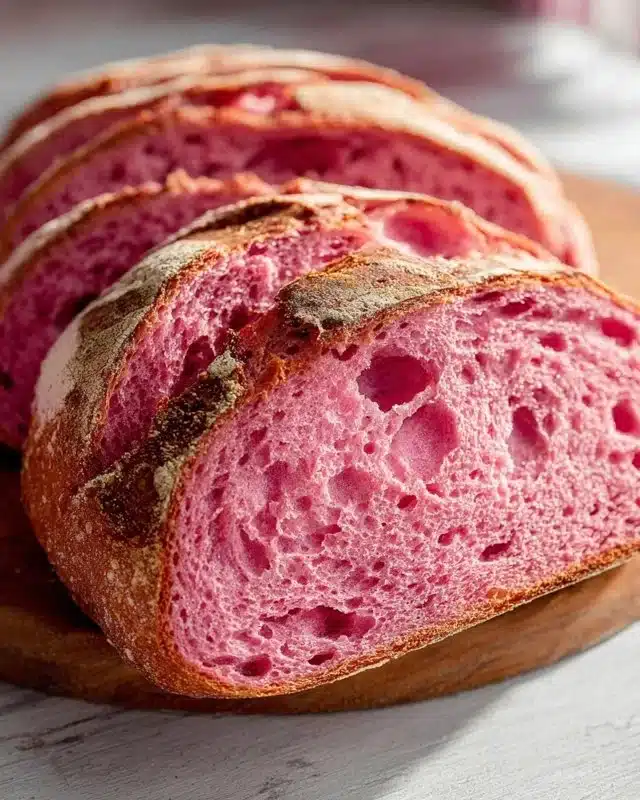
I still remember the first time I baked Pink Sourdough Bread for Valentine’s Day — the kitchen smelled faintly of sea salt and roasted beet, and my starter hummed on the windowsill like a small, dependable engine. I folded the dough with the kind of reverence usually reserved for letters or old photographs, and I watched the blush of beetroot deepen into a tender, rosy crumb. If you need a gentle primer on starter care before you begin, I often point friends to a simple sourdough bread recipe for beginners that helps demystify hydration and timing.
Flavor and Popularity
The Unique Flavor Profile of Pink Sourdough Bread for Valentine’s Day
Pink Sourdough Bread for Valentine’s Day carries a surprising, layered taste. At first bite, you notice the gentle tang from the natural yeast and lactobacilli in the starter, which balances the sweet, earthy notes from beetroot purée or powdered beet. Then, you sense a buttery mouthfeel when you brush high-quality butter on the warm slice, and finally an umami whisper if you include a touch of sautéed mushrooms or flaky sea salt. Because the beet adds both color and a mild vegetal sweetness, this loaf feels celebratory but still grounded; it pairs beautifully with herbs and soft cheeses for a romantic brunch or as a vivid side dish on a candlelit dinner.
Why This Recipe Is a Family Favorite and Crowd-Pleaser
This loaf delights because it looks like a treat while staying wholesome and familiar. For family gatherings, children are enchanted by the rosy hue, and grown-ups appreciate the complex crust-to-crumb contrast. Because it uses the same dependable sourdough techniques you already trust, you can bake something special without reinventing your process. Also, you can adjust the intensity of pink by varying beet concentration and decide whether to infuse the dough with herbs for a savory twist or keep it subtly sweet. Guests often ask for the recipe, and I find that trust builds when a loaf both photographs beautifully and tastes of home.
Ingredients and Preparation
Essential Ingredients and Possible Substitutions
- Active sourdough starter (100g, fed and bubbly). If you are new to starters, follow the beginner link above to get a reliable rhythm.
- Bread flour (450g) — use a mix of whole wheat (up to 25%) for a nuttier flavor.
- Water (300–350g) — adjust for hydration; warmer climates may require less.
- Salt (10g) — flaky sea salt brings a clean finish.
- Beet purée (100–140g) or 2–3 tablespoons beetroot powder — beet purée offers color and moisture, while powdered beet adds intense pigment without extra water.
- Olive oil or softened butter (optional, 15–20g) — for a richer crumb and a buttery note.
- Optional add-ins: sautéed mushrooms, fresh thyme or rosemary, a sprinkle of cracked black pepper, or a drizzle of honey if you want a sweeter loaf.
Substitutions and tips: use canned or roasted beet if pressed into purée, and puree it smooth so it blends effortlessly. For a dairy-free option, omit butter and instead swirl in olive oil; the loaf will maintain a lovely crumb. Also, if you prefer a more earthy umami profile, fold in finely sautéed shiitake mushrooms (cooled) before the final shaping.
Step-by-Step Recipe Instructions with Tips
- Feed your starter 6–8 hours before you start so it peaks during mixing. Active starter ensures strong fermentation and good oven spring.
- Mix flour, water, and beet purée (or beet powder hydrated with water) in a bowl until there are no dry bits. Autolyse for 30–45 minutes; this hydrates the flour and develops gluten without overworking the dough.
- Add the starter and salt, then mix until the dough comes together. If you use butter or oil, incorporate it now. For extra flavor, fold in herbs or sautéed mushrooms at this stage.
- Perform a series of stretch-and-folds every 30 minutes for the first 2 hours. This builds structure and traps gas for a lively crumb. Meanwhile, keep the dough covered so it stays moist.
- Let bulk fermentation continue until the dough has visibly risen by about 30–50% and shows bubbles on the surface — usually 3–5 hours depending on temperature. Because beet can add moisture, monitor the dough carefully and adjust resting times.
- Pre-shape gently, rest 20 minutes, then final shape into a boule or batard. Place in a floured banneton or linen-lined bowl.
- Proof in the refrigerator for 8–16 hours for better flavor development and easier scoring. Cold proofing strengthens the taste and makes the crumb more complex.
- Preheat your oven with a Dutch oven inside to 475°F (245°C) for at least 45 minutes. Score the loaf right before baking to control the bloom.
- Bake covered for 20 minutes, then remove the lid and reduce temperature to 450°F (230°C), baking another 18–25 minutes until the crust deepens and the internal temperature reaches 205–210°F (96–99°C). Allow the loaf to cool on a wire rack for at least 2 hours before slicing; cooling finishes the set of the crumb and keeps slices from becoming gummy.
Tip: If you plan to toast slices for a breakfast board, consider the right toaster for sourdough bread to get even browning without crushing the crumb. 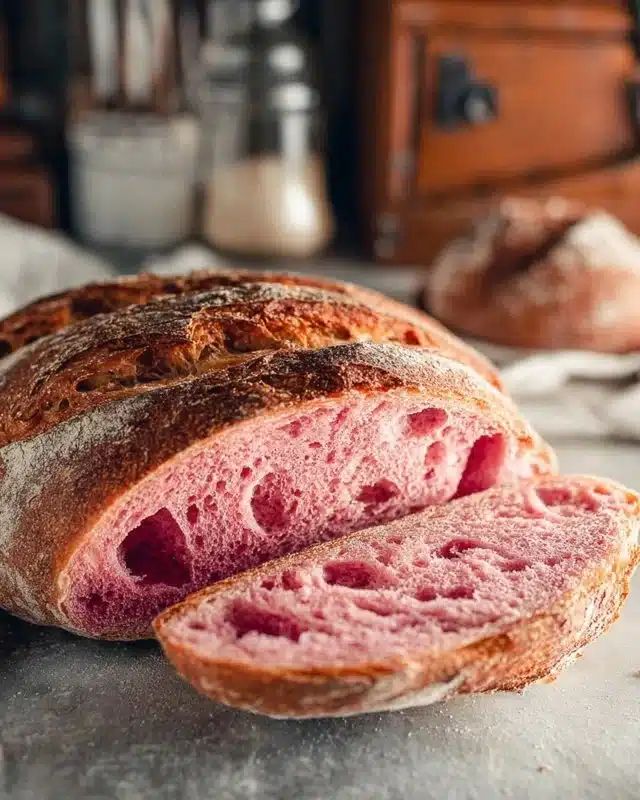
Cooking Techniques and Tips
How to Cook Pink Sourdough Bread for Valentine’s Day Perfectly
Bake with steam and high heat for a crisp, blistered crust. Using a preheated Dutch oven traps steam, which helps the crust expand early and then develop color when exposed to dry heat. Also, use sharp scoring to direct the loaf’s expansion; for a romantic look, try a heart-shaped score or a gentle leaf pattern. Because the beet adds moisture and sugar, the crust may brown faster; therefore lower the oven by 10–20°F if your crust darkens too quickly, and extend the bake with more airflow in the final 10 minutes.
Common Mistakes to Avoid
- Over-hydrating the dough with beet purée. Beet adds fluid, so subtract water accordingly and aim for the same tacky-but-not-runny feel.
- Underproofing. A pink loaf that remains dense likely needed more time for fermentation. Look for bubbles and a jiggly, airy feel when you tip the bowl.
- Overloading with add-ins. Too many mushrooms or herbs can weigh down rise; fold in sparingly and keep pieces small.
- Cutting too soon. The crumb needs time to set; slicing immediately yields a gummy interior. Wait at least two hours for best results.
Health Benefits and Serving Suggestions
Nutritional Value of Pink Sourdough Bread for Valentine’s Day
Pink Sourdough Bread for Valentine’s Day combines the wholesome advantages of sourdough fermentation with nutrient-rich beetroot. Fermentation increases mineral bioavailability and reduces phytic acid, which helps your body absorb iron and zinc. Moreover, beetroot delivers folate, potassium, and antioxidants like betalains, which contribute an earthy sweetness and anti-inflammatory properties. If you use whole-grain flour, you gain additional fiber and B vitamins, while adding herbs and sautéed mushrooms increases the loaf’s savory micronutrients. Although sourdough remains a carbohydrate-rich food, its slower digestion tends to be gentler on blood sugar, especially when paired with protein and fat.
Best Ways to Serve and Pair This Dish
Serve warm slices with a smear of cultured butter, honey goat cheese, or a soft brie sprinkled with fresh thyme. For a savory spread, make a mushroom and herb sauté with a splash of balsamic and pile it onto thick slices; the umami echoes the sourdough tang. For a romantic breakfast, toast the bread and top with smoked salmon, a lemon-dressed dill crème fraîche, and a scatter of microgreens. As a side dish, this loaf complements roasted beet salad, grilled steak with herb butter, or a creamy leek bisque. Because the color is so striking, use the bread as a centerpiece on your Valentine’s table; it photographs well and tastes even better.
FAQ
What type of mushrooms are best for Pink Sourdough Bread for Valentine’s Day?
Choose shiitake or cremini for a deep, meaty umami that complements the beet’s sweetness. Sauté them first with a little butter and thyme to concentrate flavors, drain any excess moisture, and fold them in during the final shaping so they don’t release water into the dough.
Can I use dried garlic instead of fresh?
Yes, you can use dried garlic powder sparingly for convenience; however, fresh garlic offers a brighter, more vibrant aroma. If you use dried garlic, reduce the amount to avoid a bitter note and rehydrate it slightly before adding to the dough.
How do I store leftover Pink Sourdough Bread for Valentine’s Day?
Store at room temperature in a paper bag or a bread box to maintain crust integrity for up to 3 days. If you prefer a softer crust, keep slices in a loosely sealed plastic bag, but consume within 2 days for best flavor. Always avoid refrigeration because it accelerates staling.
Can I freeze Pink Sourdough Bread for Valentine’s Day?
Yes, freeze whole loaves wrap well in plastic wrap and then foil for up to 3 months. Thaw at room temperature and re-crisp in a 350°F oven for 10–15 minutes. For individual slices, flash-freeze on a tray and then transfer to a freezer bag so you can toast single servings without thawing the entire loaf.
Conclusion
If you’re like me, you bake not just with recipes but with memory and intention. There’s something comforting about a warm, rosy loaf on the table — it invites conversation, slows the day, and makes ordinary moments feel special. Trust me, you’ll want to make this again and again; each time you’ll learn a little more about your starter, your oven, and how a simple beet can turn bread into an expression of love.

Easy Pink Sourdough Bread for Valentine’s Day
- Total Time: 285 minutes
- Yield: 1 loaf
- Diet: Vegetarian
Description
A stunning pink sourdough bread that’s perfect for Valentine’s Day, featuring a gentle tang and earthy sweetness from beetroot.
Ingredients
- Active sourdough starter (100g, fed and bubbly)
- Bread flour (450g)
- Water (300–350g)
- Salt (10g)
- Beet purée (100–140g) or 2–3 tablespoons beetroot powder
- Olive oil or softened butter (optional, 15–20g)
- Optional add-ins: sautéed mushrooms, fresh thyme or rosemary, cracked black pepper, or honey
Instructions
- Feed your starter 6–8 hours before starting.
- In a bowl, mix flour, water, and beet purée (or beet powder hydrated with water) until there are no dry bits. Autolyse for 30–45 minutes.
- Add the starter and salt, then mix until the dough comes together. Incorporate butter or oil if using.
- Perform a series of stretch-and-folds every 30 minutes for the first 2 hours.
- Let bulk fermentation continue until the dough has visibly risen by 30–50% (3–5 hours).
- Pre-shape gently and rest for 20 minutes, then final shape into a boule or batard.
- Proof in the refrigerator for 8–16 hours.
- Preheat oven with a Dutch oven to 475°F (245°C) for at least 45 minutes.
- Score the loaf before baking.
- Bake covered for 20 minutes, then reduce temperature to 450°F (230°C) and bake another 18–25 minutes.
- Cool on a wire rack for at least 2 hours before slicing.
Notes
Adjust beet concentration for desired pink intensity. Use canned or roasted beet for purée if necessary.
- Prep Time: 240 minutes
- Cook Time: 45 minutes
- Category: Bread
- Method: Baking
- Cuisine: American
Nutrition
- Serving Size: 1 slice
- Calories: 220
- Sugar: 6g
- Sodium: 400mg
- Fat: 6g
- Saturated Fat: 2g
- Unsaturated Fat: 4g
- Trans Fat: 0g
- Carbohydrates: 34g
- Fiber: 2g
- Protein: 7g
- Cholesterol: 0mg
Keywords: sourdough, Valentine’s Day, pink bread, beetroot, baking
