
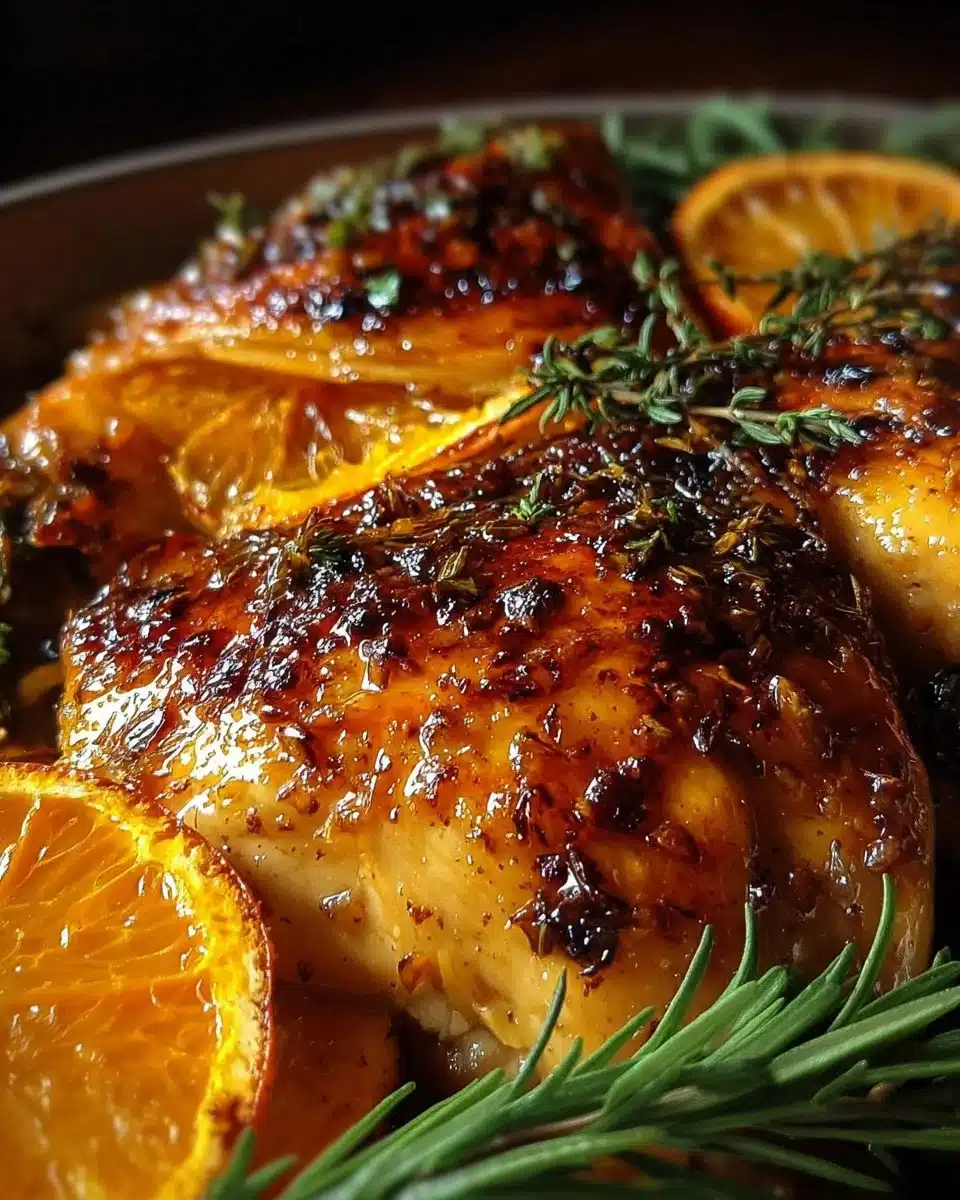
The first time I roasted a full bird with whole oranges, the kitchen filled with a scent so bright and nostalgic that I stopped stirring the pasta I had simmering on the stove. Roasted Orange Chicken smelled like late summers in my grandmother’s courtyard — sunny, a little sticky with honey, and threaded with rosemary. I pulled the pan from the oven and felt the skin crackle under my fingers; at once, the house felt like a warm, bustling trattoria. If you love savory-sweet contrasts, you might also enjoy my take on a pepper-forward dish like black pepper chicken with mushrooms, but tonight the orange leads the chorus.
Flavor and Popularity
The Unique Flavor Profile of Roasted Orange Chicken
Roasted Orange Chicken balances citrus brightness and caramelized sweetness against rich, savory chicken. The orange provides natural acids and sugars that break down connective tissue, thus tenderizing the meat while the skin crisps and browns beautifully. In addition, herbs like rosemary and thyme lend an earthy, herbaceous counterpoint, and a hint of soy or fish sauce brings subtle umami to the glaze. Meanwhile, butter or olive oil encourages a glossy, buttery finish that carries the sauce to every bite. Finally, a touch of heat from red pepper flakes or black pepper wakes the palate, so the dish never tastes cloying.
Why This Recipe Is a Family Favorite and Crowd-Pleaser
This recipe earns its place at family tables for several reasons. First, the aroma announces itself, therefore guests arrive hungry and curious. Second, the method favors whole ingredients and simple steps, so any home cook can succeed. Third, roasted citrus appeals across ages because children love the sticky-sweet rind while adults savor the layered flavors. In short, this Roasted Orange Chicken feels festive, yet it remains comfortingly familiar — the perfect balance for weekday dinners and small celebrations alike.
Ingredients and Preparation
Essential Ingredients and Possible Substitutions
- Whole chicken (3–4 lbs), spatchcocked or left whole depending on preference; otherwise use bone-in thighs for quicker cooking.
- Oranges (2–3): use one for juicing and one for roasting; substitute blood oranges for a deeper color.
- Olive oil or melted butter: butter gives a richer, buttery result, while olive oil yields a lighter crust.
- Honey or maple syrup: helps caramelize and balance acidity; omit for less sweetness.
- Fresh rosemary and thyme: dried herbs work, but use them sparingly at half the quantity.
- Garlic (3–4 cloves), minced; dried garlic powder may replace fresh in a pinch, however fresh gives more aromatic vibrancy.
- Soy sauce or tamari: adds umami and salt; substitute with anchovy paste diluted in water for an earthy depth.
- Salt and freshly ground black pepper: season well and taste as you go.
- Optional: red pepper flakes, grated orange zest, and a splash of white wine or chicken stock for the pan sauce.
Possible Substitutions Summary
- Chicken pieces instead of whole bird: reduce roasting time accordingly.
- Citrus swap: lemon or lime works, but oranges deliver the best balance of sweetness and acidity.
- Sweetener: swap honey for brown sugar or maple for a deeper flavor.
Step-by-Step Recipe Instructions with Tips
Prep and Marinade
- Preheat the oven to 425°F (220°C). Meanwhile, pat the chicken dry with paper towels, because a dry skin crisps better.
- Zest one orange and reserve the zest. Then juice one orange; measure about 1/3 to 1/2 cup of juice.
- In a bowl, whisk together the orange juice, 2 tablespoons olive oil or melted butter, 2 tablespoons honey, 1 tablespoon soy sauce, minced garlic, and a pinch of red pepper flakes. Add salt and pepper to taste.
- Score the chicken skin gently and rub half the marinade under the skin, working the mixture toward the breast and thighs. Then brush the remaining marinade on the skin. Finally, tuck sprigs of rosemary under the skin and inside the cavity for aromatic depth.
Tip: For even more flavor, marinate the chicken for 2–4 hours in the fridge. However, you can roast immediately if short on time.
Roasting
- Place halved oranges and extra rosemary sprigs around the chicken in a roasting pan. Roast at 425°F; for a whole 3–4 lb chicken, roast about 55–75 minutes, until an instant-read thermometer reads 165°F in the thickest part of the thigh.
- Baste once or twice with pan juices; then, in the last 10 minutes, brush with a thin coat of honey or glaze and increase the heat to 450°F to encourage caramelization.
Tip: If the breast browns too quickly, tent it loosely with foil while the thighs finish cooking.
Making the Glaze
- Remove the chicken and rest it for 10–15 minutes, because resting allows the juices to redistribute.
- Meanwhile, place the roasting pan on the stovetop over medium heat. Add a splash of white wine or chicken stock, scrape up browned bits, and then reduce by half. Whisk in a tablespoon of butter and the reserved orange zest to finish the glossy glaze.
Tip: Strain the glaze for a silky sauce, or leave it rustic with bits of orange and roasted garlic.
Serving
- Carve the chicken and spoon the glaze generously over the pieces. Garnish with fresh herbs and additional orange zest.
- Serve with roasted root vegetables, herbed rice, or a leafy green tossed with a citrus vinaigrette for contrast.
Cooking Techniques and Tips
How to Cook Roasted Orange Chicken Perfectly
Control temperature and timing with confidence. First, a high initial oven temperature seals the skin and encourages browning, while a slightly lower middle stage ensures the meat cooks through without drying. Second, use an instant-read thermometer and remove the chicken at 165°F internal temperature in the thigh, then rest it; residual heat will carry it a few degrees higher. Also, massaging flavor under the skin helps the meat taste as if it slow-marinated. For crispier skin, finish under broil for 1–2 minutes, watching closely so the sugars in the glaze do not burn.
Common Mistakes to Avoid
- Overcrowding the pan: if you add too many vegetables, the chicken will steam rather than roast. Instead, give air and space so heat circulates.
- Skipping the rest: carving too soon squeezes juices out, and the meat risks drying. Therefore, allow at least 10 minutes of rest.
- Under-seasoning the pan: the cavity and under-skin areas need salt and aromatics; otherwise, the flavors remain surface-level.
- Using only juice without zest: zest contains essential oils that provide brightness, so always include it for depth.
Health Benefits and Serving Suggestions
Nutritional Value of Roasted Orange Chicken
Roasted Orange Chicken offers lean protein and vitamin C from the citrus. Moreover, roasting reduces the need for added fats compared to frying; therefore, the dish remains relatively light. In addition, pairing it with vegetables or whole grains boosts fiber and micronutrient content. For lower sodium, use low-sodium soy or replace it with a little lemon juice and extra herbs.
Best Ways to Serve and Pair This Dish
- Side dishes: roast firmer vegetables like carrots and parsnips, or make a buttery mashed potato to catch the glaze. Alternatively, serve on a bed of sautéed greens to add earthy, slightly bitter balance.
- Salads: present a crisp fennel and orange salad to echo the citrus theme while introducing crunchy texture.
- Sauces: for a richer meal, offer a small bowl of pan sauce alongside; for a lighter plate, drizzle just a little and let the herbs shine.
- Beverages: pair with a medium-bodied white wine like Vermentino, or choose a light-bodied red if you prefer more tannic balance.
For a restaurant-style starter, consider following with a warming bowl of caramelized onion roasted garlic bisque, which complements the orange’s sweetness with savory depth.
FAQ Section
What type of mushrooms are best for Roasted Orange Chicken?
I prefer cremini or shiitake mushrooms because they offer an earthy, umami character that pairs well with citrus. Also, their firm texture holds up during roasting, and they caramelize attractively. However, button mushrooms work in a pinch, and for a woodsy note, try king oyster mushrooms sliced lengthwise.
Can I use dried garlic instead of fresh?
You can use dried garlic, but fresh garlic delivers more aromatic brightness and even a little sweetness when roasted. If you must use dried, reduce the quantity — for example, use 1/4 teaspoon garlic powder to replace one clove — because dried forms concentrate flavor differently.
How do I store leftover Roasted Orange Chicken?
Store leftovers in an airtight container in the refrigerator for up to 3–4 days. Moreover, slice or shred the meat before storing so you can reheat quickly. To reheat, warm gently in a skillet with a splash of stock to restore moisture, and then finish with a fresh squeeze of orange or a scatter of herbs.
Can I freeze Roasted Orange Chicken?
Yes, you can freeze cooked chicken for up to 3 months. Wrap pieces tightly and label with the date. When thawing, move the chicken to the refrigerator overnight and reheat gently to retain texture. Also, consider freezing the glaze separately in an ice cube tray; then thaw and stir it into gently reheated chicken for freshness.
Conclusion
If you’re like me, you will find that Roasted Orange Chicken becomes one of those recipes you return to again and again. There’s something comforting about the way citrus lifts the heavy, savory flavors while the roast gives you that golden, crackly skin that everyone reaches for first. Trust me, you’ll want to make this again and again: it warms the kitchen, gathers people around the table, and somehow turns an ordinary evening into a small celebration. Buon appetito — and may your next roast smell of sunshine and rosemary.
Print
Best 5-Step Roasted Orange Chicken
- Total Time: 95 minutes
- Yield: 4 servings
- Diet: Paleo
Description
A delicious roasted orange chicken with a perfect balance of savory and sweet flavors, garnished with fresh herbs and served with a glossy glaze.
Ingredients
- Whole chicken (3–4 lbs), spatchcocked or left whole
- Oranges (2–3), one for juicing and one for roasting
- Olive oil or melted butter (2 tablespoons)
- Honey or maple syrup (2 tablespoons)
- Fresh rosemary (sprigs)
- Fresh thyme (sprigs)
- Garlic (3–4 cloves), minced
- Soy sauce or tamari (1 tablespoon)
- Salt and freshly ground black pepper (to taste)
- Optional: red pepper flakes, grated orange zest, white wine or chicken stock (for pan sauce)
Instructions
- Preheat the oven to 425°F (220°C) and pat the chicken dry with paper towels.
- Zest and juice one orange; combine the juice with olive oil, honey, soy sauce, garlic, and red pepper flakes.
- Score the chicken skin gently and rub half the marinade under the skin and on the outside, then tuck rosemary and thyme inside the cavity.
- Place halved oranges and rosemary in the roasting pan, roast chicken for 55–75 minutes until the internal temperature reaches 165°F.
- Remove the chicken, let it rest for 10–15 minutes, prepare the glaze from the roasting pan drippings, and serve carved with glaze and fresh herbs.
Notes
Marinate the chicken for 2–4 hours before roasting for enhanced flavor. Make sure to rest the chicken before carving.
- Prep Time: 20 minutes
- Cook Time: 75 minutes
- Category: Main Course
- Method: Roasting
- Cuisine: Italian
Nutrition
- Serving Size: 1 serving
- Calories: 400
- Sugar: 7g
- Sodium: 500mg
- Fat: 15g
- Saturated Fat: 6g
- Unsaturated Fat: 8g
- Trans Fat: 0g
- Carbohydrates: 30g
- Fiber: 3g
- Protein: 35g
- Cholesterol: 80mg
Keywords: Roasted Chicken, Orange Chicken, Family Dinner, Comfort Food, Easy Recipe
