
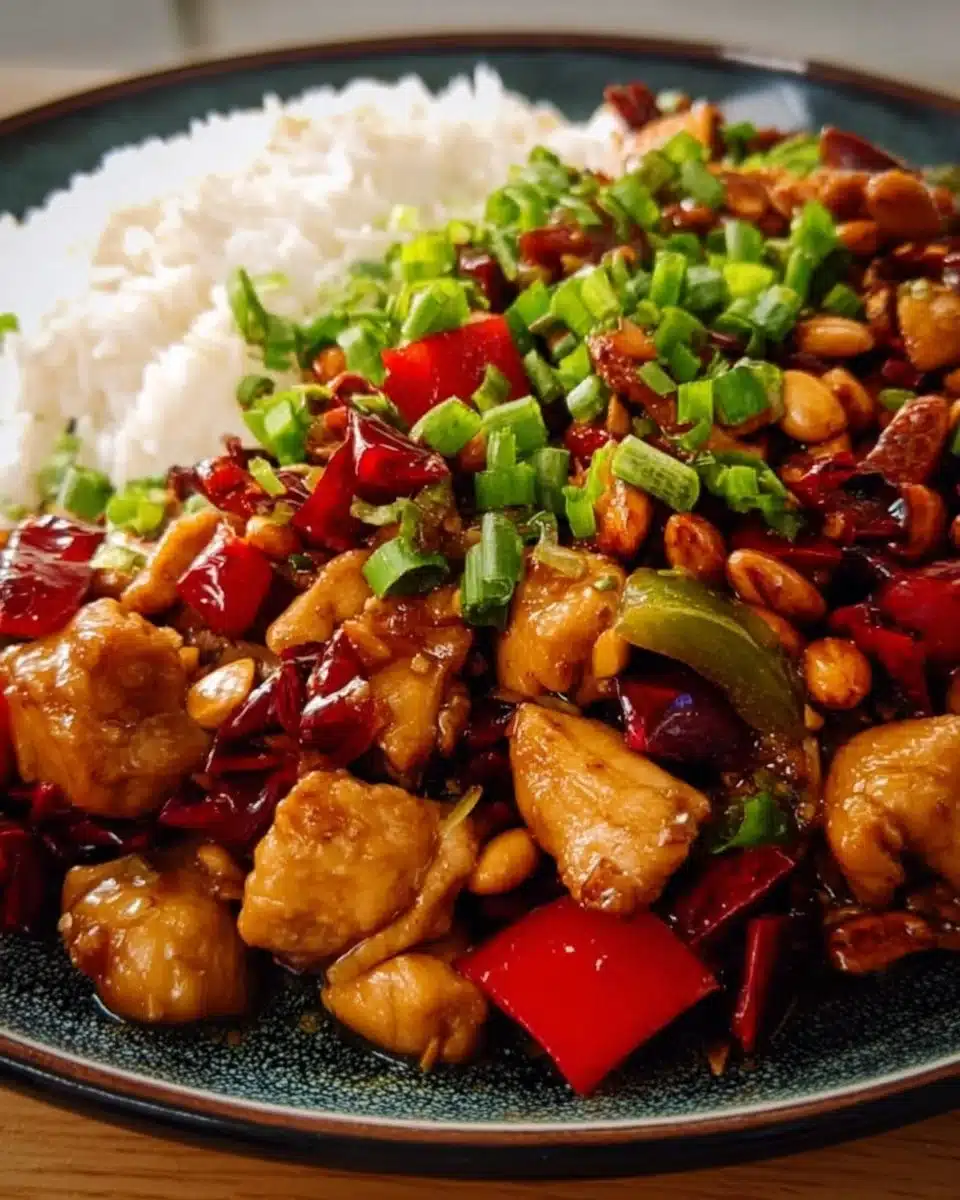
I still remember the first time I made Easy Kung Pao Chicken for a wind-blown dinner at my cottage, and the kitchen smelled of toasted peanuts and chilies while the fog rolled in from the Pacific. Easy Kung Pao Chicken arrived like a bright, saucy surprise on the table, and because I wanted something quick yet satisfying, I stirred and tasted until the balance felt right. If you crave a weeknight meal with a little heat and a lot of heart, try pairing it with an Easy Chicken and Rice Stuffed Peppers recipe for a full, comforting plate that feeds the soul.
Flavor and Popularity
The Unique Flavor Profile of Easy Kung Pao Chicken
Easy Kung Pao Chicken brightens the dinner table because it balances sweet, salty, sour, and spicy elements in one skillet. The dish pairs tender chicken with earthy mushrooms or crunchy bell peppers, and then it ties everything together with a glossy, umami-rich sauce. Moreover, the toasted peanuts deliver a buttery, nutty accent, while Sichuan peppercorns add a floral, numbting sensation that elevates ordinary stir-fry into something remarkable. Because the sauce reduces quickly, you get sticky, flavor-packed bites that cling to rice and noodles alike. People praise this recipe because it tastes restaurant-quality yet comes together fast, which makes it both practical and celebratory.
Why This Recipe Is a Family Favorite and Crowd-Pleaser
Families love this version of Easy Kung Pao Chicken because you can scale it up easily and tweak the heat. Kids often enjoy the sweet-savory notes, while adults appreciate the layered spices and textures. Also, you can swap ingredients to match dietary needs, so it works for picky eaters as well as adventurous guests. Therefore, this meal moves effortlessly from a cozy weeknight to a potluck centerpiece, and it proves that a simple skillet and a handful of pantry staples can produce something memorable.
Ingredients and Preparation
Essential Ingredients and Possible Substitutions
- Boneless, skinless chicken thighs or breasts, cut into bite-size pieces (thighs stay juicier; breasts are leaner).
- Cornstarch for light dredging, which yields a crisp exterior when sautéed.
- Soy sauce and dark soy or a touch of oyster sauce for deeper umami.
- Rice vinegar and a little sugar for that pleasing sweet-sour balance.
- Dried red chilies, chili flakes, or a chili paste like doubanjiang for heat.
- Sichuan peppercorns for floral, tongue-tingling notes; optional if you prefer mild.
- Garlic and fresh ginger for aromatic depth; do not substitute both with dried forms if you want the freshest flavor, although dried garlic can work in a pinch.
- Roasted peanuts or cashews for buttery crunch; you can substitute cashews for a slightly creamier note.
- Bell peppers and scallions for a fresh bite; mushrooms such as shiitake or cremini add earthy richness.
- Sesame oil and neutral oil (like grapeseed or canola) for cooking.
Substitution notes: If you want gluten-free, use tamari or a gluten-free soy substitute and verify the oyster sauce. For a vegetarian version, replace chicken with firm tofu or hearty mushrooms, and use a vegetarian oyster sauce or mushroom soy.
Step-by-Step Recipe Instructions with Tips
Prepare the chicken by tossing it with a tablespoon of soy sauce and a tablespoon of cornstarch; then let it rest for about 10 minutes so the cornstarch forms a light coating, which helps the chicken sear nicely. Meanwhile, combine your sauce: mix 3 tablespoons soy sauce, 1 tablespoon rice vinegar, 2 teaspoons sugar or honey, 1 tablespoon dark soy or oyster sauce, and 1/2 cup chicken stock or water. Stir in 1 teaspoon cornstarch to thicken later, and set the sauce aside.
Heat a large skillet or wok over medium-high heat, and add 1 to 2 tablespoons of neutral oil; next, add the dried red chilies and Sichuan peppercorns, and stir until they become fragrant, which only takes about 30 seconds. Add the chicken in a single layer, and let it sear without crowding the pan, flipping once so both sides color well. Remove the chicken to a plate once nearly cooked.
In the same skillet, add a touch more oil if needed, then sauté chopped garlic, ginger, and white parts of scallions until fragrant. Add sliced bell peppers and mushrooms, and cook until they soften but still hold snap; this preserves texture while melding flavors. Return the chicken to the skillet, stir, and pour in the sauce mixture. Stir constantly until the sauce thickens and turns glossy, coating the chicken and vegetables evenly. Finally, stir in roasted peanuts and a drizzle of sesame oil, and garnish with chopped scallions and, if you like, a sprinkle of toasted sesame seeds.
Tips: Always preheat your skillet well so the chicken gets a good sear, and do not overcrowd the pan; if you must, cook chicken in batches. Also, taste and adjust seasoning at the end—sometimes a dash more rice vinegar brightens the whole dish, and sometimes a pinch of sugar smooths the heat.
Cooking Techniques and Tips
How to Cook Easy Kung Pao Chicken Perfectly
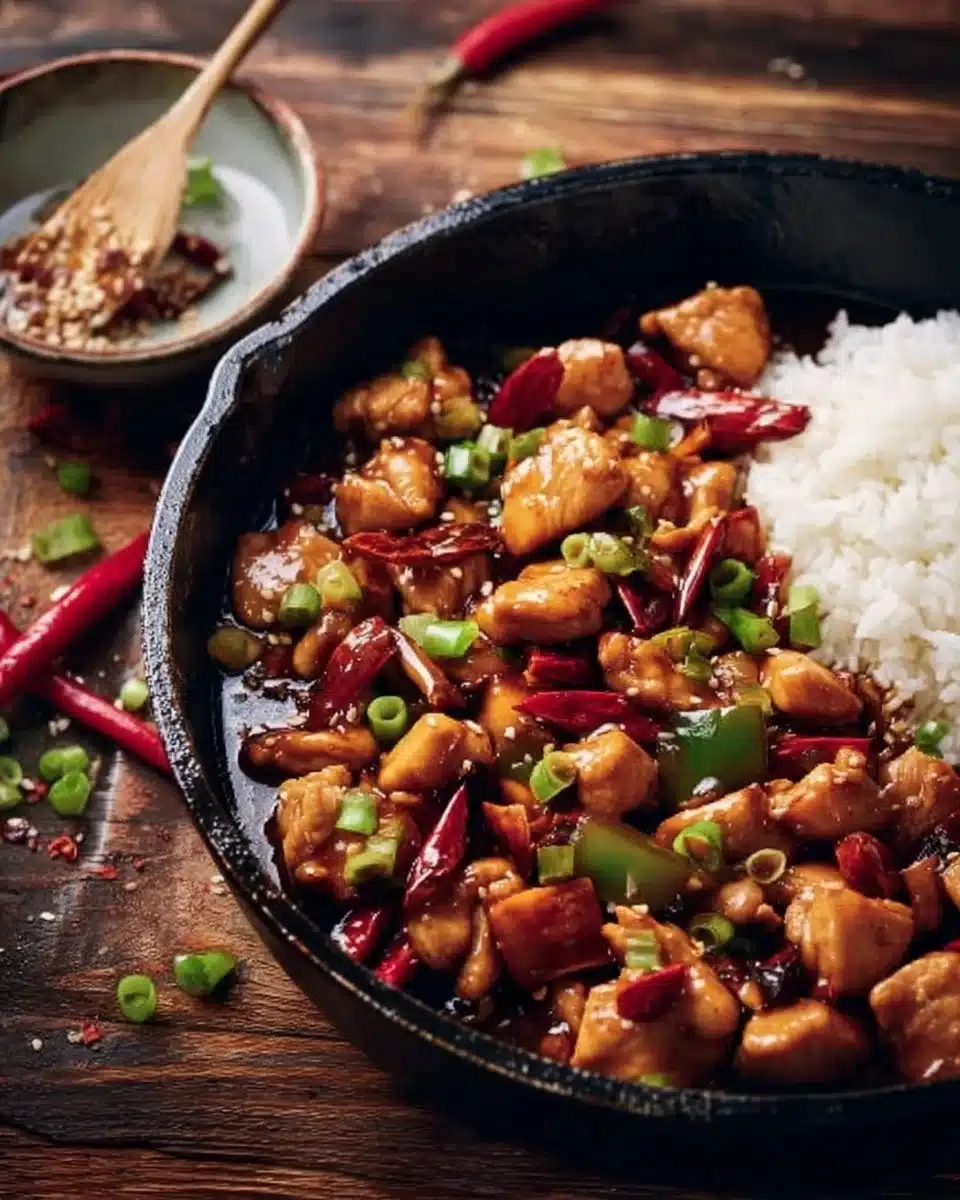
First, cut chicken into uniform pieces so they cook evenly. Next, use cornstarch to create a thin crust that locks in juices; moreover, sear the chicken on high heat for caramelization, and then lower the heat to finish cooking. Meanwhile, cook aromatics briefly to avoid bitterness, and quickly stir-fry vegetables to preserve color and crunch. Finally, toss everything with the sauce over medium heat so it reduces and clings to each piece without becoming gluey. Because temperature control matters, adjust your stove slightly lower if the sauce starts bubbling too aggressively.
Common Mistakes to Avoid
Many cooks make the mistake of using low heat throughout, which leads to steaming rather than searing; therefore, raise the heat for the initial sear. Another common error involves overcooking vegetables until limp; instead, aim for tender-crisp. Also, adding the sauce too early dilutes its potency—keep the sauce ready and only add it when the chicken and veg finish cooking. Lastly, skipping the final seasoning check often leaves the dish flat, so taste and tweak with soy, vinegar, or sugar at the end.
Health Benefits and Serving Suggestions
Nutritional Value of Easy Kung Pao Chicken
Easy Kung Pao Chicken offers a balanced meal when you include vegetables and serve it over a moderate portion of rice or noodles. Chicken provides lean protein, while bell peppers add vitamins A and C, and mushrooms contribute earthy antioxidants and minerals. Peanuts or cashews deliver healthy fats and a satisfying texture, and when you cook with moderate oil and control the sodium of your soy sauce, the dish fits nicely into an overall healthy eating pattern. For lighter versions, trim excess fat, use more vegetables than protein, and swap white rice for brown rice or cauliflower rice to boost fiber.
Best Ways to Serve and Pair This Dish
Serve Easy Kung Pao Chicken over steamed jasmine rice, brown rice, or a simple fried rice. For a lower-carb option, scoop it on cauliflower rice or a bed of wilted greens. Because the dish carries bold flavors, also offer simple sides that cleanse the palate—cucumber salad, quick pickled carrots, or steamed bok choy with sesame. If you want a comforting casserole for a cozy night, try combining flavors with an Easy Chicken Fajita Casserole as an alternate weeknight option; the contrast between spicy stir-fry and cheesy bake makes for a diverse weekly menu.
Health-forward swaps: use low-sodium soy sauce, add more vegetables like broccoli and snap peas, and limit added sugar to keep the glycemic impact low. Meanwhile, a small handful of nuts adds protein and satiety, so you feel satisfied without overeating.
FAQ Section
What type of mushrooms are best for Easy Kung Pao Chicken?
Cremini and shiitake mushrooms work especially well because they bring earthy, meaty flavors that match the sauce’s umami. Moreover, shiitakes add a slightly woodsy aroma, while creminis remain firm when sautéed. If you prefer a milder taste, use white button mushrooms, although they won’t deliver as much depth.
Can I use dried garlic instead of fresh?
You can use dried garlic in a pinch, but fresh garlic and ginger release volatile oils that deliver fresher, brighter flavors. Therefore, using fresh aromatics improves the overall balance, and you should only substitute dried garlic for convenience or if fresh is unavailable.
How do I store leftover Easy Kung Pao Chicken?
Cool leftovers quickly, then transfer them to an airtight container and refrigerate for up to 3–4 days. Reheat gently on the stovetop over medium heat with a splash of water or broth to loosen the sauce, and stir occasionally until heated through. Because peanuts can soften in the fridge, add a few fresh roasted nuts when serving to restore crunch.
Can I freeze Easy Kung Pao Chicken?
Yes, you can freeze it, but expect a slight change in texture, especially in vegetables like bell peppers and scallions. Freeze the dish in a well-sealed container for up to three months, and thaw overnight in the fridge before reheating. When reheating, refresh the texture by briefly sautéing in a hot pan or adding a few fresh vegetables.
Conclusion
If you’re like me and you chase comforting flavors that remind you of home, there’s something comforting about a bright, sticky skillet of Easy Kung Pao Chicken punctuated with crunchy peanuts and fresh scallions. Trust me, you’ll want to make this again and again because it feeds both the body and the memory in the same spoonful. Give it a try on a foggy evening, and let the aroma warm your kitchen while you listen to the sea beyond the windows.
Print
Easy Kung Pao Chicken
- Total Time: 30 minutes
- Yield: 4 servings 1x
- Diet: Gluten-Free option available
Description
A quick and satisfying dish that perfectly balances sweet, salty, sour, and spicy flavors.
Ingredients
- 1 lb boneless, skinless chicken thighs or breasts, cut into bite-size pieces
- 1 tbsp cornstarch
- 3 tbsp soy sauce
- 1 tbsp rice vinegar
- 2 tsp sugar or honey
- 1 tbsp dark soy sauce or oyster sauce
- 1/2 cup chicken stock or water
- 1–2 tbsp neutral oil
- 1–2 dried red chilies
- 1 tsp Sichuan peppercorns (optional)
- 2 cloves garlic, minced
- 1 inch fresh ginger, minced
- 2 scallions, chopped (white and green parts separated)
- 1 bell pepper, sliced
- 1 cup mushrooms (shiitake or cremini), sliced
- 1/2 cup roasted peanuts or cashews
- 1 tsp sesame oil
Instructions
- Toss chicken with 1 tbsp soy sauce and 1 tbsp cornstarch; let rest for 10 minutes.
- Mix sauce ingredients: 3 tbsp soy sauce, 1 tbsp rice vinegar, 2 tsp sugar, 1 tbsp dark soy, and 1/2 cup chicken stock. Stir in 1 tsp cornstarch and set aside.
- Heat oil in a skillet over medium-high heat; add dried chilies and Sichuan peppercorns for 30 seconds. Add chicken in a single layer, sear on both sides, and remove from the skillet.
- Sauté garlic, ginger, and white scallions in the skillet; add bell peppers and mushrooms, cook until softened. Return chicken, stir in sauce, and cook until thickened.
- Stir in peanuts and sesame oil; garnish with green scallions and optional sesame seeds before serving.
Notes
Adjust the heat to your preference; swap ingredients as needed for dietary needs.
- Prep Time: 10 minutes
- Cook Time: 20 minutes
- Category: Main Course
- Method: Stir-Frying
- Cuisine: Chinese
Nutrition
- Serving Size: 1 serving
- Calories: 375
- Sugar: 6g
- Sodium: 500mg
- Fat: 15g
- Saturated Fat: 2g
- Unsaturated Fat: 10g
- Trans Fat: 0g
- Carbohydrates: 25g
- Fiber: 3g
- Protein: 30g
- Cholesterol: 70mg
Keywords: Kung Pao, Chicken, Stir-Fry, Easy Recipes, Quick Dinner
