
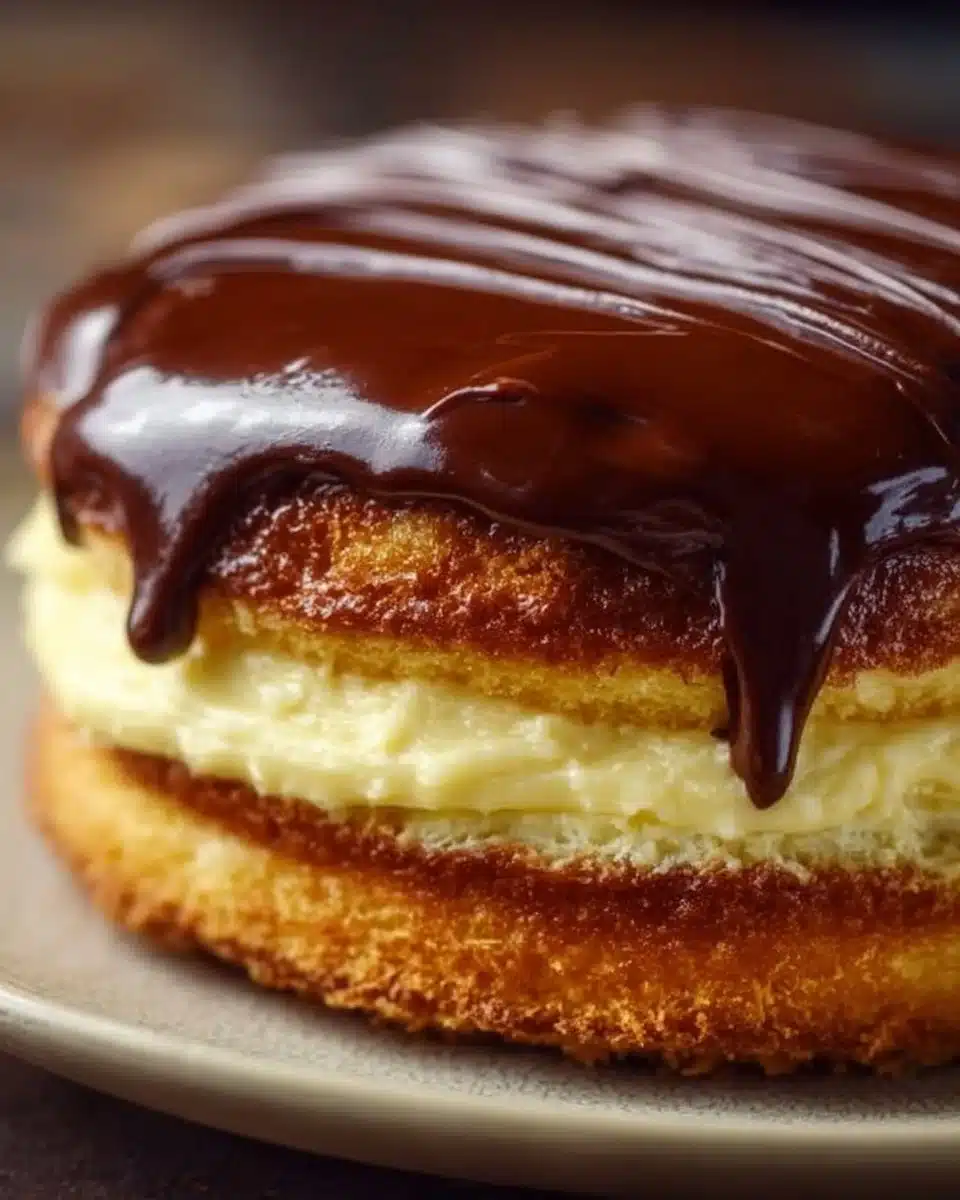
I still remember the afternoon I first tasted Boston Cream Pie; the name felt like a contradiction, yet the first bite made everything sensible. Boston Cream Pie landed on my palm-warmed plate like seaside sunlight—silky vanilla custard cuddled between tender sponge layers and crowned with glossy chocolate. I made a mess of my lap, and yet I remember thinking, quietly and decisively, that this is what celebration tastes like. Back then, I lived in a small rental with a kitchen that smelled of butter and salt, and I learned that a simple cake could hold the kind of comfort you keep returning to. Today, I make Boston Cream Pie when I want to stitch a day back together, and I hope you’ll let this recipe do the same.
If you love creamy, citrusy bars, you’ll understand why custard and crust feel like old friends; nevertheless, Boston Cream Pie rests on its own with a balance of sponge, pastry cream, and shiny chocolate glaze.
Flavor and Popularity
The Unique Flavor Profile of Boston Cream Pie
Boston Cream Pie blends simple, honest flavors into something greater than the sum of its parts. The sponge cake layer tastes buttery and slightly eggy, but not heavy; instead, it offers a tender base that soaks up a whisper of custard. The pastry cream (or vanilla custard) delivers a creamy, vanilla-forward richness that tastes both warm and bright because I like to steep my vanilla whole beans for depth. Finally, the chocolate glaze offers an immediate, bittersweet counterpoint; when it lands, the chocolate’s roasted notes play against the custard’s vanilla, and the whole dessert sings.
Moreover, textures matter. The sponge must give with a spring, the custard should hold its shape without wobbling like a poorly set pudding, and the glaze must crack with a neat little scale when sliced. I love a contrast between silky custard and a slightly firm chocolate top. Also, some bakers brush syrup on the layers for extra moisture, and I do that when I want a more indulgent bite.
Why This Recipe Is a Family Favorite and Crowd-Pleaser
This cake pleases a crowd because it feels elegant yet approachable. Children smile at the chocolate top, while adults appreciate the custard’s subtle vanilla and the cake’s tender crumb. At potlucks or birthdays, Boston Cream Pie feels like a classic rediscovered; people pause, then reach for seconds. It travels well, it pairs beautifully with coffee, and it gives me permission to slow down for a moment to savor something truly homemade.
Ingredients and Preparation
Essential Ingredients and Possible Substitutions
- All-purpose flour: provides structure; you can swap half for cake flour if you prefer a softer crumb.
- Granulated sugar: sweetens the batter and the custard. For a gentler sweetness, use superfine sugar.
- Eggs: they leaven the sponge and enrich the custard. Use large eggs at room temperature for best volume.
- Unsalted butter: brings a buttery, slightly savory balance; substitute with clarified butter if you want a cleaner butter flavor.
- Whole milk and heavy cream: essential for a creamy custard; you can use all milk for a lighter custard, but it loses some silkiness.
- Vanilla bean or pure vanilla extract: vanilla bean gives aromatic depth, yet a good extract works fine.
- Cornstarch: stabilizes the pastry cream; you can use a combination of flour and cornstarch, but cornstarch keeps the custard clearer.
- Bittersweet chocolate and a touch of cream or butter for the glaze: choose chocolate you would eat plain; it matters.
Feel free to add a splash of dark rum or orange liqueur to the custard for a grown-up note, although I usually keep it classic because the simple interplay of vanilla and chocolate needs no fancy accompaniment.
Step-by-Step Recipe Instructions with Tips
Prepare the sponge cake:
- Preheat oven to 350°F (175°C). Butter two 8-inch round cake pans, then line the bottoms with parchment and butter again.
- Whisk together 1 1/2 cups all-purpose flour, 1 teaspoon baking powder, and a pinch of salt. Set aside.
- In a stand mixer, beat 4 large room-temperature eggs with 1 cup granulated sugar on high until pale and tripled in volume, about 6–8 minutes. The batter should ribbon when lifted.
- Fold in the dry mixture gently, then fold in 1/4 cup melted and cooled unsalted butter. Work quickly to preserve the air pockets.
- Divide the batter evenly between the pans and smooth the tops. Bake for 18–22 minutes, until the cakes spring back lightly. Let cool in pans for 10 minutes, then turn onto racks to cool completely.
Make the pastry cream:
- In a saucepan, bring 2 cups whole milk and 1/2 cup heavy cream just to a simmer with the seeds of 1 vanilla bean (or 2 teaspoons vanilla extract). Meanwhile, whisk together 4 large egg yolks, 1/2 cup granulated sugar, and 3 tablespoons cornstarch until pale.
- Temper the egg mixture by whisking in a ladle of hot milk, then return everything to the saucepan. Cook over medium heat, whisking constantly, until the mixture thickens and boils gently, about 1–2 minutes. Remove from heat and whisk in 2 tablespoons unsalted butter for silkiness. Strain the custard into a bowl to remove any cooked egg bits. Cover with plastic pressed to the surface and chill until firm, at least 2 hours.
Assemble the cake:
- If the cakes domed, trim them level with a serrated knife. Place one layer on your serving plate and brush lightly with simple syrup if you like extra moisture. Then pipe or spread a thick, even layer of chilled pastry cream. Top with the second cake and chill the assembled cake for 20–30 minutes while you make the glaze.
Make the chocolate glaze:
- Place 6 ounces bittersweet chocolate in a heatproof bowl. Heat 1/2 cup heavy cream until it simmers, then pour over the chocolate and let sit for a minute. Whisk until smooth, and add 1 tablespoon unsalted butter for sheen. Let the glaze cool slightly but still pourable.
Glaze and finish:
- Pour the glaze over the chilled cake, letting it drip over the edges. Smooth with an offset spatula, then chill again so the glaze sets. Slice with a sharp knife warmed under hot water for clean cuts.
Tips:
- Use room-temperature ingredients for even mixing and better structure.
- Whisk the eggs until they hold ribbons—this gives lift without chemical leaveners.
- Strain the pastry cream for a velvety texture.
- Chill between steps to make assembly cleaner and the custard more stable.

Cooking Techniques and Tips
How to Cook Boston Cream Pie Perfectly
Baking a perfect Boston Cream Pie depends on control and timing. First, beat the eggs well; air is your leavening agent, and therefore proper volume matters. Second, when you fold in the butter, do so gently; otherwise, you collapse the batter and lose lift. Third, temper the custard carefully; whisk constantly when adding the hot milk so the eggs set into a silky cream rather than scrambling. Fourth, chill the custard until firm: a warm custard will seep into the cake and make the whole dessert sloppy. Finally, work with a slightly cooled glaze so it spreads evenly and holds a glossy finish.
Common Mistakes to Avoid
- Overmixing the batter: you will deflate the eggs and end with a dense sponge.
- Underbaking or overbaking: underbaked cake will collapse; overbaked cake will become dry. Watch the time and test for spring.
- Skipping the chill time for pastry cream: warm custard ruins texture and assembly.
- Pouring very hot glaze onto a warm cake: hot glaze melts the custard and creates streaks. Cool the cake slightly before glazing.
- Using low-quality chocolate for the glaze: a glaze made with poor chocolate tastes flat; choose chocolate with depth for the best results.
Health Benefits and Serving Suggestions
Nutritional Value of Boston Cream Pie
Boston Cream Pie proves that comfort food can still be rooted in relatively simple ingredients. The dessert provides protein from eggs and dairy, and small amounts of calcium and vitamin A from milk and butter. However, it remains an indulgent treat high in sugars and saturated fats, so enjoy it as an occasional celebration dessert rather than a daily snack. If you want to lighten it, reduce the sugar in the cake slightly, use more milk and less cream in the custard, or serve smaller slices.
Best Ways to Serve and Pair This Dish
Serve Boston Cream Pie slightly chilled, but not ice-cold, so the custard breathes and the flavors open. Pair it with freshly brewed coffee or a simple black tea to cut through the richness. For a playful contrast, serve a spoonful of bright, acidic berry compote on the side, or a small scoop of vanilla bean ice cream for a double-vanilla moment. If you want to try a rustic twist, top with toasted nuts for a nutty, buttery texture; however, I usually keep the top clean so the glaze can shine.
Also, when you plan a brunch, consider balancing rich desserts with lighter savory side dishes; for example, a green salad with a citrus vinaigrette or a sautéed vegetable hash adds an earthy, bright counterpoint to the cake’s buttery sweetness. And if you enjoy experimenting, try infusing the custard with a herbal note like a faint rosemary or lavender steam—use sparingly to avoid overpowering the classic pairing.
I often compare custard-based desserts across recipes; therefore, if you enjoy bars with a similar custard-to-crust ratio, you might like these apple pie bars for a fruit-forward alternative. For a different custard experience that still uses a crunchy base, check out this recipe for apple pie bars with streusel topping which balances butteriness and fruit in a way that complements this Boston Cream Pie.
FAQ Section
Bold questions and clear answers follow.
What type of mushrooms are best for Boston Cream Pie?
Mushrooms do not belong in a classic Boston Cream Pie, so you won’t find them in traditional recipes. If you explore a savory pastry inspired by custard techniques—perhaps a quiche-style savory tart—then earthy shiitake or cremini lend umami well. However, I advise keeping mushrooms out of the classic dessert and saving their savory charm for side dishes.
Can I use dried garlic instead of fresh?
Garlic never appears in a Boston Cream Pie, so this substitution does not apply. If you create a savory version of custard or a custard accompaniment, dried garlic powder works for a gentle, long-lasting flavor, whereas fresh garlic gives a sharper, more immediate bite. Use dried garlic sparingly in baked custards to avoid overpowering delicate dairy flavors.
How do I store leftover Boston Cream Pie?
Wrap the cake lightly with plastic wrap or place it in an airtight cake container. Store it in the refrigerator because the pastry cream needs to stay cold. The cake keeps well for 2–3 days; after that, the sponge begins to absorb moisture and the custard can lose structure. When ready to serve, let slices sit at room temperature for 10–15 minutes to soften slightly and release aromas.
Can I freeze Boston Cream Pie?
You can freeze Boston Cream Pie, but take care. Freeze unglazed sponge layers wrapped tightly and then thaw them before assembling with fresh pastry cream and glaze for best texture. Alternatively, flash-freeze individual slices on a tray, then wrap each slice in plastic and foil; thaw in the refrigerator overnight. Freezing fully assembled cake leads to a textural shift: the custard may become grainy upon thawing. Therefore, for consistently good results, freeze components instead of the whole finished cake if possible.
Conclusion
If you’re like me and you measure comfort in spoonfuls of custard and the glossy promise of chocolate, then Boston Cream Pie will become a little ritual in your kitchen. There’s something comforting about the way simple ingredients—eggs, milk, sugar, a good chocolate—come together and demand attention. Trust me, you’ll want to make this again and again; moreover, each time you bake it, you’ll learn another small thing about timing, texture, and patience. So pull out your best pan, steep a good vanilla, and let this cake be the excuse for a quiet celebration at your table.
Print
Best Boston Cream Pie
- Total Time: 120 minutes
- Yield: 8 servings 1x
- Diet: Vegetarian
Description
A delightful dessert featuring silky vanilla custard nestled between tender sponge layers and topped with glossy chocolate glaze.
Ingredients
- 1 1/2 cups all-purpose flour
- 1 teaspoon baking powder
- 1/4 teaspoon salt
- 4 large eggs
- 1 cup granulated sugar
- 1/4 cup unsalted butter, melted and cooled
- 2 cups whole milk
- 1/2 cup heavy cream
- 1 vanilla bean (or 2 teaspoons vanilla extract)
- 4 large egg yolks
- 3 tablespoons cornstarch
- 2 tablespoons unsalted butter
- 6 ounces bittersweet chocolate
- 1/2 cup heavy cream (for glaze)
Instructions
- Preheat oven to 350°F (175°C). Butter two 8-inch round cake pans, line with parchment and butter again.
- Whisk together flour, baking powder, and salt; set aside.
- In a stand mixer, beat eggs and sugar on high until pale, about 6–8 minutes. Fold in the dry mixture, then gently fold in melted butter.
- Divide batter between pans and bake for 18–22 minutes. Let cool, then turn onto racks.
- For the pastry cream, simmer whole milk and heavy cream with the vanilla bean. Whisk yolks, sugar, and cornstarch; temper with warm milk.
- Cook the mixture until thickened and whisk in butter. Strain, cover, and chill until firm (at least 2 hours).
- Assemble by leveling the cakes, layering with chilled pastry cream, and chilling for 20–30 minutes.
- For the glaze, heat cream and pour over chocolate; whisk until smooth and add butter.
- Pour glaze over the cake and chill to set. Serve chilled.
Notes
Use room-temperature ingredients for better mixing. Strain the pastry cream for a velvety texture.
- Prep Time: 30 minutes
- Cook Time: 30 minutes
- Category: Dessert
- Method: Baking
- Cuisine: American
Nutrition
- Serving Size: 1 slice
- Calories: 350
- Sugar: 25g
- Sodium: 200mg
- Fat: 18g
- Saturated Fat: 10g
- Unsaturated Fat: 6g
- Trans Fat: 0g
- Carbohydrates: 40g
- Fiber: 1g
- Protein: 6g
- Cholesterol: 80mg
Keywords: Boston Cream Pie, dessert, cake, chocolate glaze, custard
