
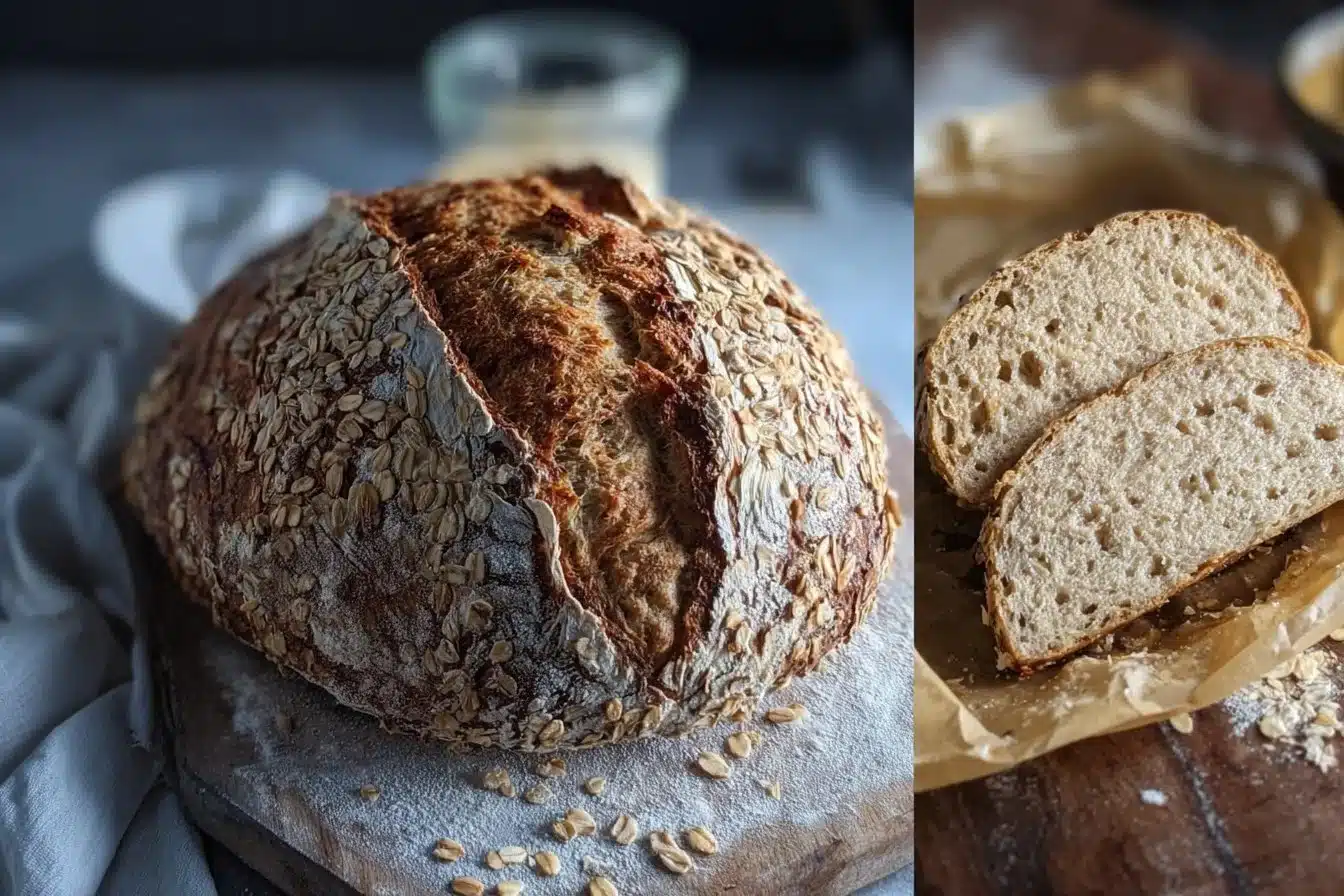
I remember the first time I coaxed a loaf into being that felt like a warm, edible hug: the Soft and Chewy Honey Oat Sourdough Bread sat on my counter with a golden, slightly glossy crust and an oat-strewn top that smelled like morning. I loved how the honey lifted the tang of the starter, and I learned, then and there, that comfort can rise and bloom from patience and a good whisk of curiosity. For a similar comfort-baking mood, I often point readers toward my favorite oatty treat, the soft chewy pumpkin oatmeal cookies, since both recipes celebrate oats and slow sweetness.
Flavor and Popularity
The Unique Flavor Profile of Soft and Chewy Honey Oat Sourdough Bread
The Soft and Chewy Honey Oat Sourdough Bread balances a gentle sourdough tang with sweet floral notes from honey, while oats add a tender, nutty chew. Moreover, the crumb remains moist because rolled oats absorb and hold just enough moisture, and the honey helps caramelize the crust during baking. Together, these elements create a loaf that tastes both rustic and refined; therefore, each slice carries a layered flavor: tang, sweet, and an earthy oat finish. When you toast it, butter or olive oil melts into the holes and creates a buttery, slightly umami bite that people ask for again and again.
Why This Recipe Is a Family Favorite and Crowd-Pleaser
Families love this bread because it feels familiar yet a little special. The honey gives a mild sweetness that appeals to kids, while the sourdough depth satisfies grown-up palates. Also, you can adapt the loaf easily—add herbs for sandwiches, or spread goat cheese and sautéed mushrooms on a toasted slice for an elegant snack. This versatility makes the Soft and Chewy Honey Oat Sourdough Bread a reliable choice for breakfast, picnic baskets, and holiday spreads. For a cozy pairing, try a bowl of warm soup and a slice of this bread; you’ll find the oats add body and comfort.
Ingredients and Preparation
Essential Ingredients and Possible Substitutions
- Active sourdough starter (fed and bubbly) — Use a whole-grain starter for more depth, or a white starter for a milder tang.
- Bread flour — You can substitute up to 30% with whole wheat for a nuttier flavor, but keep the structure with enough bread flour.
- Rolled oats — Quick oats work in a pinch, but rolled oats deliver the best chew.
- Honey — Use wildflower or clover honey; alternatively, use maple syrup but reduce water slightly.
- Water — Use room-temperature water or slightly warm if your starter needs encouragement.
- Salt — Sea salt or kosher salt both work; adjust to taste.
- Optional enrichments: olive oil or melted butter for a softer crumb; seeds or chopped nuts for texture.
Step-by-Step Recipe Instructions with Tips
Yield: One medium loaf (about 1.5–2 lbs)
Time: Active 45 minutes, bulk ferment 4–6 hours (room temp) or overnight in fridge, final proof 1–2 hours, bake 30–35 minutes
- Autolyse: In a large bowl, mix 350g bread flour with 50g rolled oats and 275–300g water until no dry flour remains. Cover and rest for 30–45 minutes to hydrate the flour and oats. This step develops gluten without extra kneading.
- Add starter and salt: Stir in 100g active sourdough starter and 8–10g salt (dissolved in a tablespoon of water). Mix until cohesive; the dough will feel tacky.
- Bulk ferment with folds: Let the dough rest at room temperature for 4–6 hours, performing 4 sets of stretch-and-folds every 30 minutes during the first 2 hours. These gentle folds strengthen the dough and trap gas. After the final fold, leave the dough undisturbed until it proofs and shows a slight rise and airy bubbles.
- Add oats and enrichments: At the end of bulk fermentation, gently knead in 30g rolled oats and 20–30g melted butter or oil if using. Add seeds now if desired. Be careful not to overwork the dough; maintain those lovely air pockets.
- Shape and bench rest: Turn the dough onto a lightly floured surface, shape it into a tight boule or bâtard, and let it bench rest for 20–30 minutes. Then perform final shaping for surface tension.
- Final proof: Place the shaped loaf into a floured banneton or bowl lined with a floured towel for final proof. Cover and proof for 1–2 hours at room temperature, or overnight in the refrigerator for deeper flavor and easier scheduling.
- Score and bake: Preheat your oven to 475°F (245°C) with a Dutch oven inside for at least 30 minutes. Carefully invert the loaf onto parchment, score with a sharp blade, and transfer into the hot Dutch oven. Reduce temperature to 450°F (230°C) and bake covered for 20 minutes. Then remove the lid and bake another 12–15 minutes until the crust bronzes and the internal temperature reaches about 205°F (96°C).
- Cool: Let the Soft and Chewy Honey Oat Sourdough Bread cool completely on a rack for at least 2 hours before slicing; this step finishes the crumb structure.
Tips: Always weigh your ingredients for consistency. Moreover, watch your dough, not the clock; fermentation times change with temperature. Also, if you want a chewier crust, bake a bit longer at a slightly lower temperature. Finally, use a lame for clean scoring and to guide where the loaf blossoms.

Cooking Techniques and Tips
How to Cook Soft and Chewy Honey Oat Sourdough Bread Perfectly
Use steam early in the bake to encourage oven spring; a Dutch oven provides that steam naturally, and therefore it supplies consistent results. Also, preheat your baking vessel thoroughly so the loaf meets a hot surface and rises quickly. When scoring, aim for a confident cut that’s shallow enough to guide expansion but deep enough to open. During baking, rotate the loaf if your oven heats unevenly; this action creates even browning. Finally, cool fully before cutting; the crumb continues to set, and slicing too soon gives a gummy texture.
Common Mistakes to Avoid
- Underproofing: If you bake too soon, the loaf will be dense. Instead, wait for visible bubbles and slight doming.
- Overworking: Excess kneading flattens the gas pockets. Use gentle folds rather than aggressive kneads.
- Too much flour at shaping: Extra flour dries the surface and prevents oven spring; therefore, use just enough to prevent sticking.
- Skipping the autolyse: That rest helps the oats hydrate and the gluten relax, which produces a softer, chewier crumb.
- Not cooling: Cutting hot bread ruins the texture; hence, patience rewards you with the perfect slice.
Health Benefits and Serving Suggestions
Nutritional Value of Soft and Chewy Honey Oat Sourdough Bread
This loaf offers whole-grain benefits when you include some whole wheat and oats. Oats add soluble fiber, which supports digestion and provides a slow-release energy source; therefore, a slice makes for a satisfying breakfast or snack. Moreover, sourdough fermentation makes some nutrients more bioavailable and can reduce phytic acid, which improves mineral absorption. While honey contributes simple sugars, the overall glycemic response tends to be gentler than with commercial white bread, especially when you eat the loaf with protein or healthy fats.
Best Ways to Serve and Pair This Dish
Serve this bread warm and smeared with butter for the simplest joy, or toast slices for sandwiches. Also, pair it with sautéed mushrooms, melted cheese, and fresh thyme for an umami-rich open-faced sandwich. For breakfast, spread ricotta with honey and top with sliced stone fruit or figs; the sourdough tang and sweet honey sing together. Additionally, the loaf stands up well as a side to stews, salads, and roasted vegetables, since its chewy crumb soaks up broths and sauces without collapsing.
FAQ Section
What type of mushrooms are best for Soft and Chewy Honey Oat Sourdough Bread?
Mushrooms are optional, but if you want to build an earthy, savory topping, choose cremini or shiitake because they offer a meaty texture and pronounced umami. Sauté them in butter or olive oil with garlic and fresh herbs, and then pile them on toasted slices for a savory contrast to the honey notes in the bread.
Can I use dried garlic instead of fresh?
Yes, you can use dried garlic, and it adds convenience. However, fresh garlic gives a brighter, more aromatic flavor, while dried garlic yields a subtler and sometimes slightly sweeter profile. Use dried garlic sparingly and rehydrate it briefly if you want a fresher effect.
How do I store leftover Soft and Chewy Honey Oat Sourdough Bread?
Store the loaf at room temperature in a paper bag or wrapped in a clean linen towel to keep the crust crisp and the crumb moist; plastic makes the crust soft and the interior gummy. If you plan to eat it within three days, keep it out at room temperature, and toast slices to refresh them before serving.
Can I freeze Soft and Chewy Honey Oat Sourdough Bread?
Absolutely. Slice the loaf first and freeze individual slices in an airtight container or heavy-duty freezer bag. Then, toast or thaw slices directly from frozen; this method preserves texture and lets you enjoy the bread over several weeks.
Additional Notes on Pairing and Variations
For more oat-forward baking ideas that share a comforting texture, I sometimes recommend treats like the soft chewy pumpkin oatmeal cookies, which echo the warm, spiced, and oat-forward character of this loaf. If you like herbs, fold chopped rosemary or thyme into the dough during the last stretch-and-fold to release aromatic oils. Also, consider sprinkling seeds like sunflower or flax on top before baking for a crunchy finish.
Conclusion
If you’re like me, you’ll find that making the Soft and Chewy Honey Oat Sourdough Bread becomes part ritual and part comfort. There’s something comforting about the slow rhythm of feeding a starter, folding the dough, and watching steam coax a crust into color. Trust me, you’ll want to make this again and again, because each loaf teaches you a little more about patience, texture, and the quiet joy of sharing warm bread at your table.

Best 5-Step Soft and Chewy Honey Oat Sourdough Bread
- Total Time: 80 minutes
- Yield: 1 medium loaf (about 1.5–2 lbs) 1x
- Diet: Vegetarian
Description
A comforting loaf of soft and chewy honey oat sourdough bread, featuring a balance of sourdough tang and sweet honey notes with a nutty oat chew.
Ingredients
- 350g bread flour
- 50g rolled oats
- 275–300g water
- 100g active sourdough starter
- 8–10g salt
- 30g rolled oats (for enrichment)
- 20–30g melted butter or olive oil (optional)
- Seeds or chopped nuts (optional)
Instructions
- In a large bowl, mix bread flour with rolled oats and water until no dry flour remains. Cover and rest for 30–45 minutes.
- Stir in active sourdough starter and salt dissolved in a tablespoon of water until cohesive.
- Let the dough rest at room temperature for 4–6 hours, performing 4 sets of stretch-and-folds every 30 minutes during the first 2 hours.
- At the end of bulk fermentation, gently knead in additional rolled oats and melted butter or oil if using.
- Shape the dough into a tight boule or bâtard, let it bench rest for 20–30 minutes, then place it in a floured banneton or bowl for final proofing.
- Preheat oven to 475°F (245°C) with a Dutch oven inside. Invert the loaf onto parchment, score with a blade, and transfer into the hot Dutch oven. Bake covered for 20 minutes, then reduce temperature to 450°F (230°C) and bake uncovered for another 12–15 minutes.
- Let the bread cool completely on a rack for at least 2 hours before slicing.
Notes
Always weigh your ingredients for consistency. Watch your dough instead of the clock to adjust fermentation times based on temperature. Use a lame for clean scoring.
- Prep Time: 45 minutes
- Cook Time: 35 minutes
- Category: Bread
- Method: Baking
- Cuisine: American
Nutrition
- Serving Size: 1 slice
- Calories: 210
- Sugar: 5g
- Sodium: 400mg
- Fat: 7g
- Saturated Fat: 2g
- Unsaturated Fat: 5g
- Trans Fat: 0g
- Carbohydrates: 32g
- Fiber: 3g
- Protein: 7g
- Cholesterol: 0mg
Keywords: sourdough, bread, honey, oats, baking
