
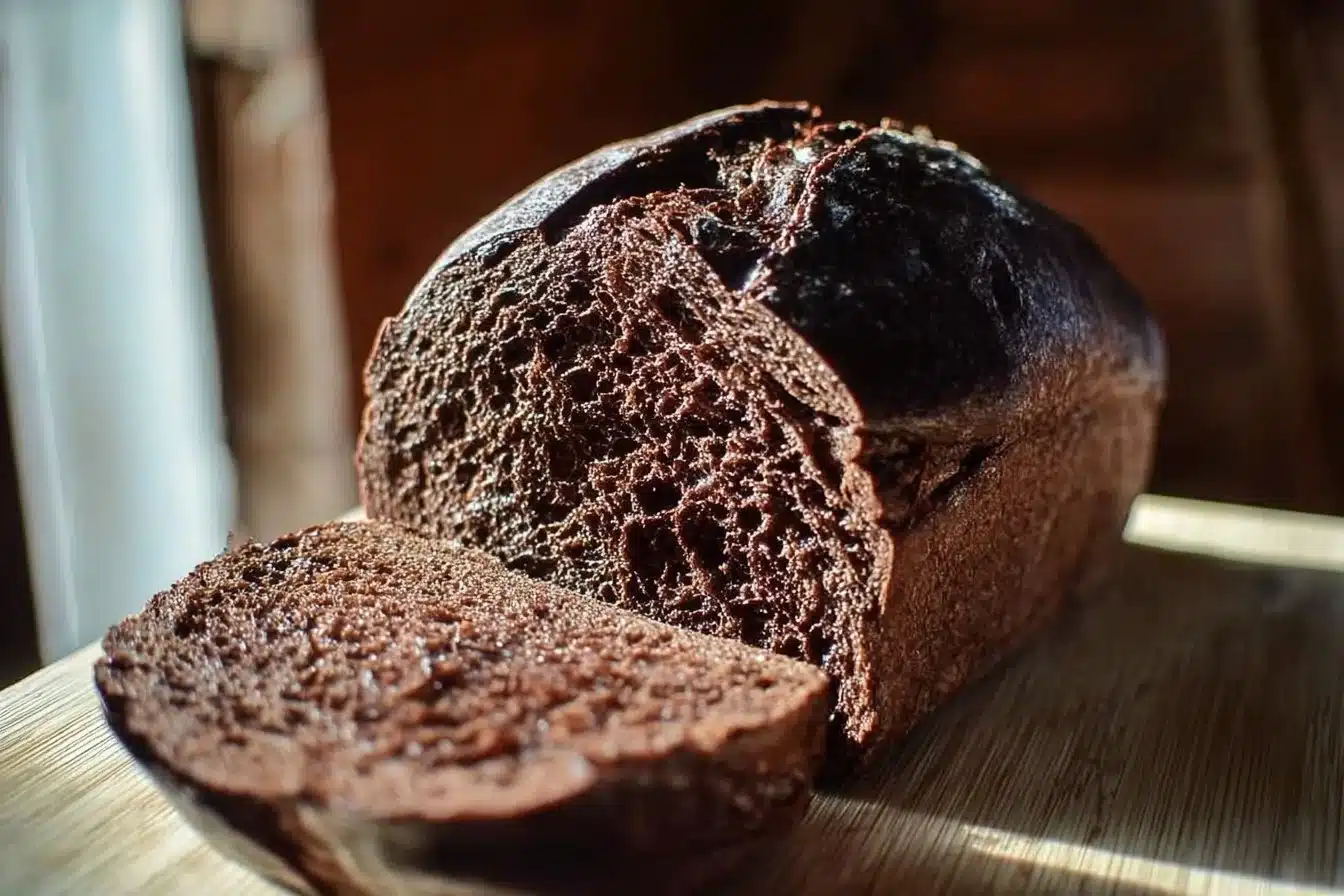
The first time I baked Double Chocolate Sourdough Bread, the kitchen smelled like rain on hot asphalt and cocoa dust, and I felt exactly like a child discovering secret treasure. Double Chocolate Sourdough Bread arrived in my life on a blustery afternoon when I needed comfort and a little mischief; therefore I added dark cocoa and shards of chocolate to a wild, tangy starter and watched the dough respond like an old friend. Even now, as the oven door opens and the crust cracks with a sound like distant thunder, I feel that same, tender thrill—because baking this loaf asks for patience, but it rewards you with something deeply indulgent and unexpectedly homey.
Flavor and Popularity
The Unique Flavor Profile of Double Chocolate Sourdough Bread
The flavor of this loaf balances bright, fermented tang with deep, bittersweet cocoa, and as a result each slice sings with contrast. The sourdough starter lends a lively acidity, while cocoa powder and high-quality dark chocolate bring cocoa’s earthy, often caramel-like notes. Moreover, when you use a 70% or higher chocolate, the umami edges come through and play beautifully against the natural sourness. The crust caramelizes and becomes slightly crackly, and meanwhile the crumb remains airy yet luxuriously tender because of long fermentation.
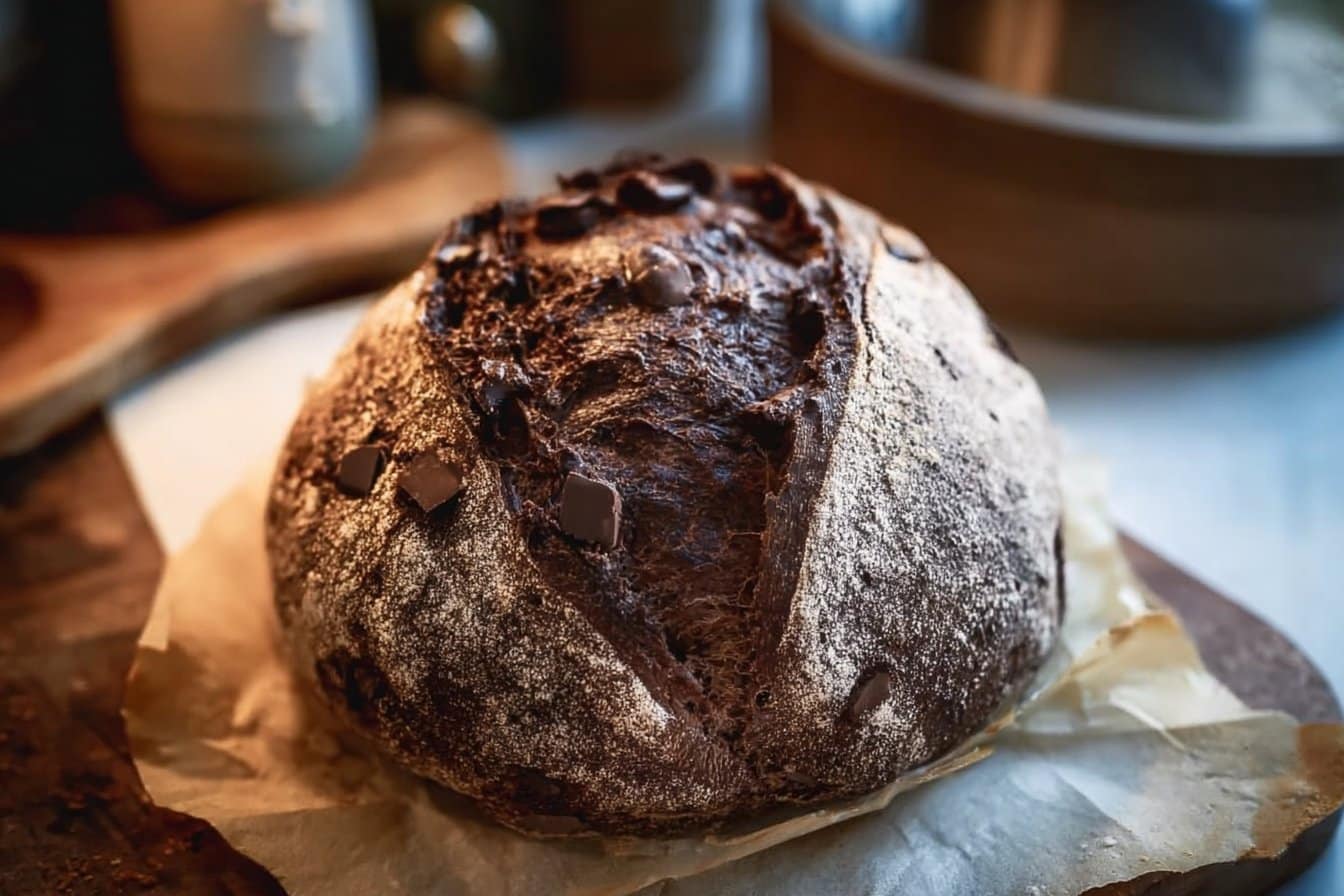
People adore this bread because it tastes like a dessert that still feels honest and rustic. Also, the double chocolate aspect—meaning both cocoa in the dough and folded-in chocolate chunks—creates pockets of molten bliss. In addition, the loaf pairs well with coffee, cream, or a smear of butter, yet it can stand as a striking centerpiece at brunch or a dinner party; consequently it has become a modern favorite in many households.
Why This Recipe Is a Family Favorite and Crowd-Pleaser
Families return to this recipe for two reasons: first, it feels indulgent, and second, it still respects the sourdough tradition. Kids and grown-ups both lean toward any bread that offers melty chocolate, while the tang from the starter keeps it from being cloying. Also, because the loaf slices well, it works both as a dessert bread and a snack, and therefore it fits into busy mornings and slow, rainy afternoons alike.
If you want to riff on the idea, try adding toasted nuts or a sprinkle of flaky sea salt to boost texture and contrast. For those who love delicate pastries, this loaf crosses that line and flirts with viennoiserie—see how a related recipe for chocolate croissant sourdough bread takes the same chocolate-sourdough idea into buttery, laminated territory.
Ingredients and Preparation
Essential Ingredients and Possible Substitutions
- Active sourdough starter (100% hydration), fed and bubbly — this is the engine, so keep it lively.
- Bread flour (or a mix of bread and all-purpose) — bread flour gives structure; however you can use all-purpose if necessary.
- Whole wheat or rye (optional) — use up to 20% of total flour for more depth and an earthy aroma.
- Unsweetened cocoa powder — Dutch-processed yields a smoother chocolate flavor.
- Fine sugar (caster or granulated) — sugar helps browning and balances acidity.
- Salt — enhances all flavors.
- Water — room temperature or slightly warm depending on your starter’s activity.
- Butter or oil (optional) — adds a gentle, buttery note.
- Dark chocolate chunks or chips — use good-quality chocolate for the best melt and mouthfeel.
- Optional: toasted nuts, flaky sea salt, or a spoonful of espresso powder to amplify chocolate notes.
Substitutions and tips: If you lack cocoa, consider using cacao nibs or a blend of cocoa and melted chocolate. If you want a dairy-free loaf, swap butter with coconut oil or olive oil, which adds a fruity layer. Also, substituting some flour with rye gives an earthy, almost nutty complexity, and therefore a stronger counterpoint to the chocolate.
Step-by-Step Recipe Instructions with Tips
- Prepare starter: Feed your starter 6–8 hours before mixing, so it peaks and smells pleasantly tangy. A lively starter accelerates fermentation and provides better oven spring.
- Mix the dough: Combine flour(s), cocoa powder, and water; mix until a shaggy dough forms. Rest for 30 minutes to autolyse; this step improves gluten development and flavor extraction.
- Add starter and salt: Stir the bubbly starter into the dough, then add sugar and salt. Knead gently for about 5–7 minutes until the dough feels elastic, or use stretch-and-folds at 30-minute intervals for three cycles.
- Add butter and chocolate: If you use butter, add softened butter during a later fold so it incorporates smoothly. Fold in the chocolate chunks toward the end so they distribute without melting.
- Bulk fermentation: Allow the dough to ferment at room temperature until it increases about 30–50% in volume; timing depends on temperature, but often 3–6 hours. During this period, perform a couple of gentle folds to strengthen the dough.
- Shape and cold proof: Shape the loaf into a boule or bâtard, then place it into a floured banneton. Refrigerate overnight; the cold proof deepens flavor and firms the dough for a better crust.
- Preheat and score: Preheat your oven with a dutch oven or baking stone to 475°F (245°C). Score the loaf with a sharp blade; a single long slash or a decorative cross works well.
- Bake: Bake covered for 20–25 minutes, then uncover and reduce heat to 430°F (220°C), baking another 12–18 minutes until the crust is deeply colored and crisp.
- Cool: Let the loaf cool at least 2 hours before slicing so the crumb sets properly.
Tips: Use a digital scale for accuracy, and therefore consistent results. Also, for a shinier crust, brush lightly with butter after baking. If you want an extra-decadent touch, nestle flaky sea salt and a drizzle of warm honey over slices before serving.
Cooking Techniques and Tips
How to Cook Double Chocolate Sourdough Bread Perfectly
First, keep your starter healthy; then the rest follows more easily. Autolyse and gentle folding save you from over-kneading, while cold fermentation rewards you with nuanced, tangy notes. Use a dutch oven for steam retention because it creates a shiny, blistered crust and therefore a crisp exterior that contrasts with the chocolate-studded crumb. Also, seed your dough with a blend of high-protein flour and a little whole grain for structure and aroma.
When scoring, aim for a decisive cut; this guides the loaf’s expansion, and otherwise the bread may tear unpredictably. Finally, cool the loaf completely before slicing; otherwise the crumb remains gummy. If you prefer a softer crust, wrap the loaf in a cotton towel as it cools, which traps a touch of steam and tones down crust crispness.
Common Mistakes to Avoid
Many bakers over-sweeten the dough, then lament that the sourdough tang disappears. Balance sweetness with the starter’s acidity and the chocolate’s bitterness, and consequently you’ll preserve character. Also, avoid adding chocolate too early; the heat and friction can melt it and smear the dough, whereas folding in at the end keeps pockets of molten chocolate intact.
Overproofing ruins oven spring, while underproofing yields a dense crumb. Therefore learn to read dough behavior rather than rely solely on time. Finally, chopping chocolate into wildly uneven pieces leads to inconsistent pockets of melt, so try for uniform chunks for predictable distribution.
Health Benefits and Serving Suggestions
Nutritional Value of Double Chocolate Sourdough Bread
Although this loaf feels indulgent, sourdough fermentation actually improves digestibility and nutrient availability. Fermentation breaks down phytic acid, so minerals like iron and zinc become more accessible. In addition, using whole-grain flours increases fiber and micronutrient content, and dark chocolate contributes antioxidants such as flavonoids, which offer cardiovascular benefits in moderation.
However, note that chocolate and sugar increase calories, so serve slices thoughtfully as part of a balanced meal. Also, those sensitive to caffeine should choose lower-cocoa chocolate, because higher-percentage bars contain more stimulating compounds.
Best Ways to Serve and Pair This Dish
Serve the bread slightly warm so the chocolate pockets remain luscious; alternatively toast slices lightly for texture, and then spread a smear of butter for a buttery-salted juxtaposition. Pair the loaf with strong coffee, a creamy latte, or even a floral black tea. For a savory contrast, serve thin slices alongside a cheese board—aged cheddar or a tangy blue cheese balances the chocolate beautifully with savory, umami notes.
For a brunch spread, offer slices next to fruit compote and yogurt. Meanwhile, for a dinner party, present a single thick slice with a scoop of vanilla ice cream and a drizzle of espresso reduction; the result feels elegant yet comforting. If you want a simple snack, toast and lightly butter the bread, then sprinkle toasted nuts or a pinch of flaky sea salt to highlight textures and flavors.
Internal Links: For ideas on buttery, laminated treats that echo this chocolate-and-sourdough concept, explore this chocolate croissant sourdough bread riff; for sourcing good starter loaves or comparing store-bought options, check this Aldi sourdough bread guide.
FAQ
What type of mushrooms are best for Double Chocolate Sourdough Bread?
Mushrooms do not typically appear in sweet chocolate breads, yet if you want a savory, earthy twist, dried porcini or cremini powder can add a subtle umami note without tasting overtly mushroomy. Use the powder sparingly—about a teaspoon per loaf—so it complements rather than competes with the chocolate.
Can I use dried garlic instead of fresh?
Dried garlic will work if you plan a savory chocolate loaf, but fresh garlic will always have a brighter, more aromatic presence. In general, avoid garlic in a sweet double chocolate loaf; however for experimental savory bakes, use small amounts and taste as you go.
How do I store leftover Double Chocolate Sourdough Bread?
Store the cooled loaf in a paper bag or wrapped in a clean kitchen towel at room temperature for up to two days to preserve crust texture. If you need to keep it longer, transfer to an airtight container, but know the crust will soften. Reheat slices in a toaster or oven to revive crispness and melt the chocolate slightly.
Can I freeze Double Chocolate Sourdough Bread?
Yes. Slice the loaf first, then wrap individual slices tightly in plastic and place them in a freezer-safe bag. Freeze up to three months. Reheat straight from frozen in a toaster oven or at low oven heat until warm and soft; consequently you’ll get near-fresh results with minimal fuss.
Conclusion
If you’re like me, you bake to feel rooted and a little bit rebellious, and there’s something comforting about a loaf that tastes like both home and celebration. Trust me, you’ll want to make this again and again: Double Chocolate Sourdough Bread rewards patience with layers of tang, chocolate, and memory. So feed your starter, warm the oven, and let the kitchen become the kind of place where ordinary afternoons turn a little bit magical.

Double Chocolate Sourdough Bread
- Total Time: 280 minutes
- Yield: 1 loaf
- Diet: Vegetarian
Description
Indulgent and rustic, this Double Chocolate Sourdough Bread blends tangy sourdough with rich cocoa and chocolate chunks for a delightful treat.
Ingredients
- Active sourdough starter (100% hydration), fed and bubbly
- Bread flour (or a mix of bread and all-purpose)
- Whole wheat or rye (optional, up to 20% of total flour)
- Unsweetened cocoa powder
- Fine sugar (caster or granulated)
- Salt
- Water (room temperature or slightly warm)
- Butter or oil (optional)
- Dark chocolate chunks or chips
- Optional: toasted nuts, flaky sea salt, or espresso powder
Instructions
- Prepare starter: Feed your starter 6–8 hours before mixing.
- Mix the dough: Combine flour(s), cocoa powder, and water; mix until a shaggy dough forms and let rest for 30 minutes.
- Add starter and salt: Stir starter into the dough, then add sugar and salt. Knead gently for about 5–7 minutes.
- Add butter and chocolate: If using butter, add it during a later fold. Fold in chocolate chunks towards the end.
- Bulk fermentation: Allow the dough to ferment until increased by 30–50% in volume (3–6 hours). Perform gentle folds during this time.
- Shape and cold proof: Shape into a boule or bâtard, place in a floured banneton, and refrigerate overnight.
- Preheat and score: Preheat oven to 475°F (245°C) and score the loaf.
- Bake: Bake covered for 20–25 minutes, then uncover and reduce heat to 430°F (220°C) for another 12–18 minutes.
- Cool: Let the loaf cool for at least 2 hours before slicing.
Notes
For a shinier crust, brush with butter after baking. To enhance flavors, serve slices slightly warm or toasted with butter.
- Prep Time: 240 minutes
- Cook Time: 40 minutes
- Category: Bread
- Method: Baking
- Cuisine: American
Nutrition
- Serving Size: 1 slice
- Calories: 320
- Sugar: 8g
- Sodium: 300mg
- Fat: 12g
- Saturated Fat: 7g
- Unsaturated Fat: 5g
- Trans Fat: 0g
- Carbohydrates: 44g
- Fiber: 3g
- Protein: 9g
- Cholesterol: 20mg
Keywords: sourdough, bread, chocolate, dessert, baking
