
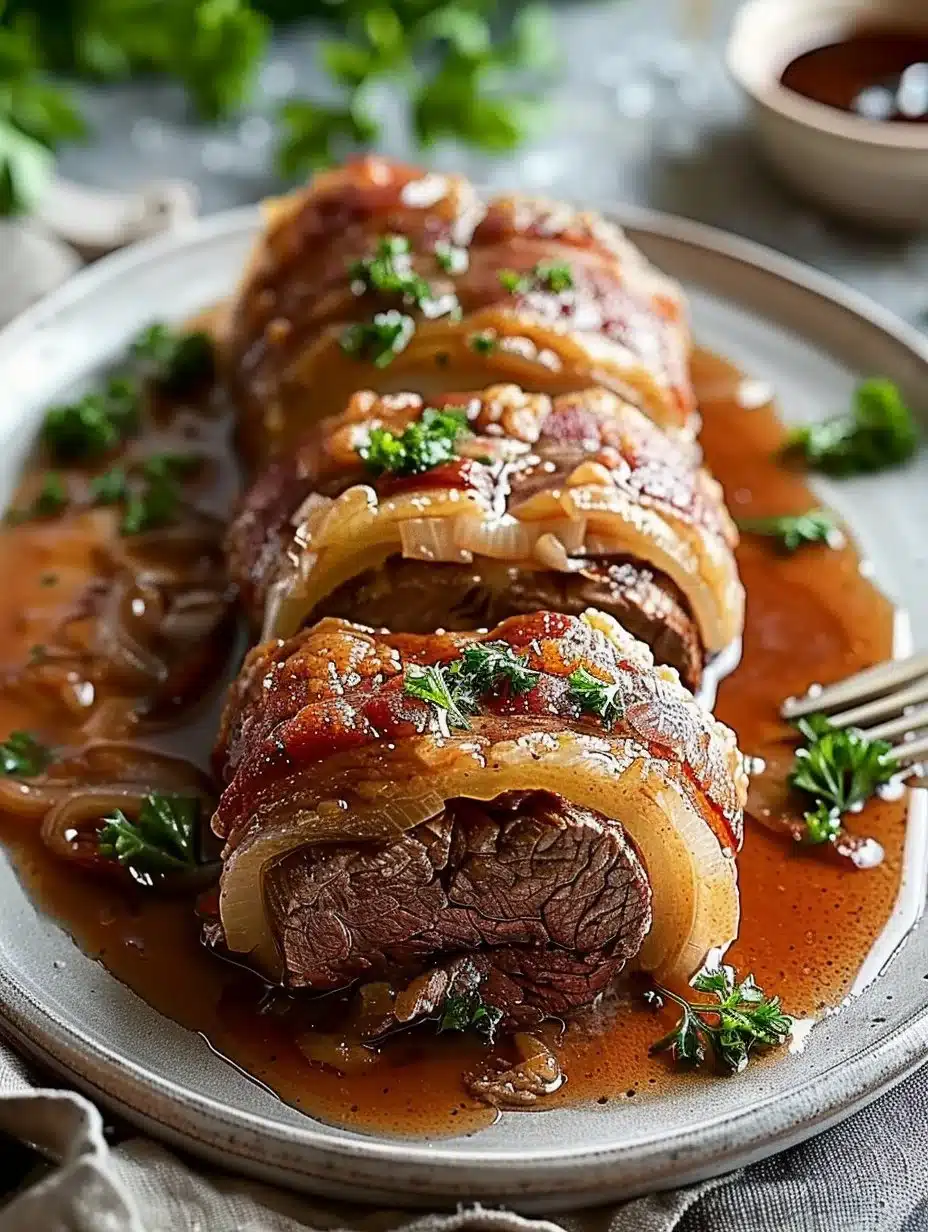
There’s a particular magic in the aroma of cooking that evokes memories long kept hidden. For me, that memory often dances back to my grandmother’s cozy kitchen in a small German village, where the scent of Traditional German Roulades filled the air, mingling with laughter and stories shared over dinner. I can still vividly recall the sound of my grandmother’s knife slicing through the tender meat, the way she carefully rolled each roulade, stuffing it with a mixture of sautéed mushrooms, onions, and fresh herbs. Each bite was a symphony of flavors—a warm, comforting embrace that filled my heart as much as my belly.
As I embarked on my own journey in the kitchen, recreating those Traditional German Roulades became a ritual of love and nostalgia. It’s amazing how food connects us to our roots, carrying stories through generations with each complex bite. Today, I’m excited to share these delightful roulades with you—a dish that’s not just about taste, but about family, comfort, and memories that come flooding back with each delicious forkful.
Flavor and Popularity
The Unique Flavor Profile of Traditional German Roulades
Traditional German Roulades showcase an impressive blend of flavors that capture the essence of home-cooked meals. The key to their unique taste lies in the careful melding of ingredients. Each roulade typically features thinly sliced beef, which absorbs the nourishing juices during the cooking process. The filling, often made from earthy sautéed mushrooms, buttery onions, and a medley of fragrant herbs, adds depth and richness.
The combination of savory beef and umami-rich fillings creates a dish that’s both hearty and satisfying. A touch of mustard elevates the flavor, giving a delightful tang that wakes up your palate. When simmered in a rich broth, the roulades become truly magical, marrying the flavors into a comforting stew that invites you to savor every bite.
Why This Recipe Is a Family Favorite and Crowd-Pleaser
What makes Traditional German Roulades stand out as a family favorite is their sheer heartiness and adaptability. They are perfect for cozy family gatherings or as an impressive dish for hosting friends. The beauty of these roulades lies not only in their flavor but in the experience they create. As they cook slowly in a pot, they invite laughter, storytelling, and togetherness.
Many families have their own secret twists—some add bacon for extra flavor, while others infuse a hint of smoked paprika for a unique spin. Regardless of the variations, Traditional German Roulades bring a feeling of warmth that is unmatched, making them a stellar choice for any occasion, whether it’s a cold winter evening or a festive holiday feast.
Ingredients and Preparation
Essential Ingredients and Possible Substitutions
To create your Traditional German Roulades, you will need a few key ingredients:
Beef: Choose thinly sliced beef, such as flank steak or round steak. If you prefer a lighter option, you can use turkey or chicken, although it will change the flavor profile slightly.
Mushrooms: Fresh mushrooms like cremini or button mushrooms work wonders, providing an earthy richness. Feel free to explore with shiitake or even wild mushrooms for a more robust flavor.
Onions and Garlic: Sautéed onions and garlic lend sweetness and depth, balancing the savory notes of the meat.
Herbs: Fresh parsley is classic, but consider adding thyme or rosemary for an aromatic lift.
Mustard: German mustard offers a delightful kick—Dijon can be a great substitute if you cannot find it.
Broth: Beef broth is traditional, but feel free to use vegetable broth for a lighter version.
Salt and Pepper: Essential for seasoning!
Step-by-Step Recipe Instructions with Tips
Prepare the Filling: Start by heating a skillet over medium heat, adding a knob of butter or a splash of olive oil. Sauté the onions until translucent, then add the minced garlic and sliced mushrooms, cooking until tender. Season with salt, pepper, and your chosen herbs. Set this savory mixture aside to cool.
Assemble the Roulades: Lay the slices of beef flat on a cutting board. Spread a thin layer of mustard over each slice, then add a generous scoop of the mushroom filling. Roll the beef tightly around the filling, securing each roulade with kitchen twine or toothpicks.
Sear for Flavor: Heat some oil in a large heavy-bottom pot or Dutch oven. Sear the roulades on all sides until they develop a beautiful brown crust. This step ensures deeper flavor during the cooking process.
Bring on the Broth: Once browned, remove the roulades and set them aside. In the same pot, add a splash of broth to deglaze, scraping up those flavorful bits from the bottom. Return the roulades to the pot, adding the remaining broth until they are just submerged.
Simmer to Perfection: Cover the pot and let the roulades simmer on low heat for about two hours. This slow cooking allows the beef to become tender and allows the flavors to meld beautifully.
Thicken the Sauce: If you desire a thicker sauce, remove the roulades after cooking and let the liquid reduce over high heat or mix a bit of cornstarch with cold water and stir it in.
Serve with Style: Once the sauce has thickened to your liking, return the roulades to the pot just to reheat. Serve with a sprinkle of fresh parsley—enjoying their comforting aroma wafting through your kitchen!

Cooking Techniques and Tips
How to Cook Traditional German Roulades Perfectly
Cooking Traditional German Roulades necessitates patience and care. The key to achieving tender, flavorful roulades is low-and-slow cooking. When simmered gently, the beef becomes fork-tender, while the fillings infuse the broth with their delicious flavors.
Investing time in the searing process also enhances the overall taste—don’t shy away from that caramelization! Using a heavy pot, like a Dutch oven, makes it easier to maintain even heat, crucial for developing a rich sauce that clings perfectly to the roulades.
Common Mistakes to Avoid
One of the most common mistakes is not sufficiently seasoning the filling. Taste your filling before rolling it up. If it lacks flavor at this stage, it won’t bring the final dish to life.
Also, don’t rush the cooking process. While it may be tempting to boil the roulades to speed things up, this can lead to tough meat. Slow, gentle simmering will yield the best results. Finally, be cautious when securing the roulades—loose ends may allow the filling to escape during cooking.
Health Benefits and Serving Suggestions
Nutritional Value of Traditional German Roulades
Traditional German Roulades bring more than just delicious flavor to your plate; they can also offer nutritional benefits. Packed with protein from the beef, they provide a source of iron and vitamin B12, essential for overall health. The mushrooms contribute antioxidants and fiber, making this dish as nourishing as it is comforting.
Best Ways to Serve and Pair This Dish
Serve your roulades alongside a hearty side—think buttery mashed potatoes or egg noodles to soak up that delectable sauce. Pair it with sautéed green beans or a simple salad for a burst of freshness.
Don’t forget about a glass of German red wine or a light lager—these beverages accentuate the flavors beautifully, making your meal an unforgettable experience.
FAQ Section
What type of mushrooms are best for Traditional German Roulades?
Fresh cremini or button mushrooms are ideal, offering a wonderful earthy flavor. Feel free to experiment with shiitake or other varieties for a richer taste!
Can I use dried garlic instead of fresh?
While you can use dried garlic, fresh garlic provides a more vibrant flavor. If using dried, remember that it is more potent—use about one-quarter of the amount.
How do I store leftover Traditional German Roulades?
Store any leftovers in an airtight container in the fridge for up to 3 days. Reheat gently on the stovetop with a splash of broth to maintain moisture.
Can I freeze Traditional German Roulades?
Yes, you can freeze them! Once cooled, store in an airtight container or freezer-safe bag. They can be enjoyed for up to 3 months—just thaw and reheat in the oven or stovetop.
Conclusion
If you’re like me and have cherished memories of family gatherings anchored around delicious meals, I invite you to try making these Traditional German Roulades. They are more than just a recipe; they offer a journey back to your roots, filling your kitchen with aromas that evoke warmth and comfort. There’s something undeniably soothing about preparing food that connects you to loved ones, and trust me, you’ll want to make this again and again. Experience the joy of gathering around the table, savoring every bite, and letting the delicious flavors weave their way into your own family stories. Happy cooking!
